
Canada’s retaliatory tariffs on $20 billion in U.S. goods took effect just after midnight on Sept. 8, aimed at applying economic pressure on the United States.
Since President Donald Trump unveiled the contours of his expansive trade agenda in April 2025, Canada has been one of two nations—the other being China—to retaliate.
The two countries are now engaged in tit-for-tat tariffs.
Here’s what to know about Canada’s counter-tariffs on American exports.
Inside Canada’s Dollar-for-Dollar Tariffs
Canada’s dollar-for-dollar tariffs will target 7 percent of U.S. exports north of the border. They will home in on a large basket of goods—from steel and aluminum to carpets and cheese—with rates ranging from 15 to 50 percent.
They will apply only to the approximately 700 goods that legally qualify as U.S.-origin under USMCA marking rules. Goods that are currently in transit to Canada are exempt.
Trade talks fell through last month after both sides complained over last-minute demands.
Canada said U.S. officials threatened French-language protections and cultural subsidies, a claim the current administration disputes.
Instead, the United States offered its neighbor to the north the “best deal in the world,” says Trade Representative Jamieson Greer.
“We offered them the best deal. They looked at it square in the face and turned around,” Greer told Fox News’ “Special Report” on Sept. 4.
“When they came back, they wanted more, they wanted more tariff relief. It wasn’t good enough to have the best deal in the world,” he continued. “They wanted it to be even better. These are things we couldn’t accommodate.”
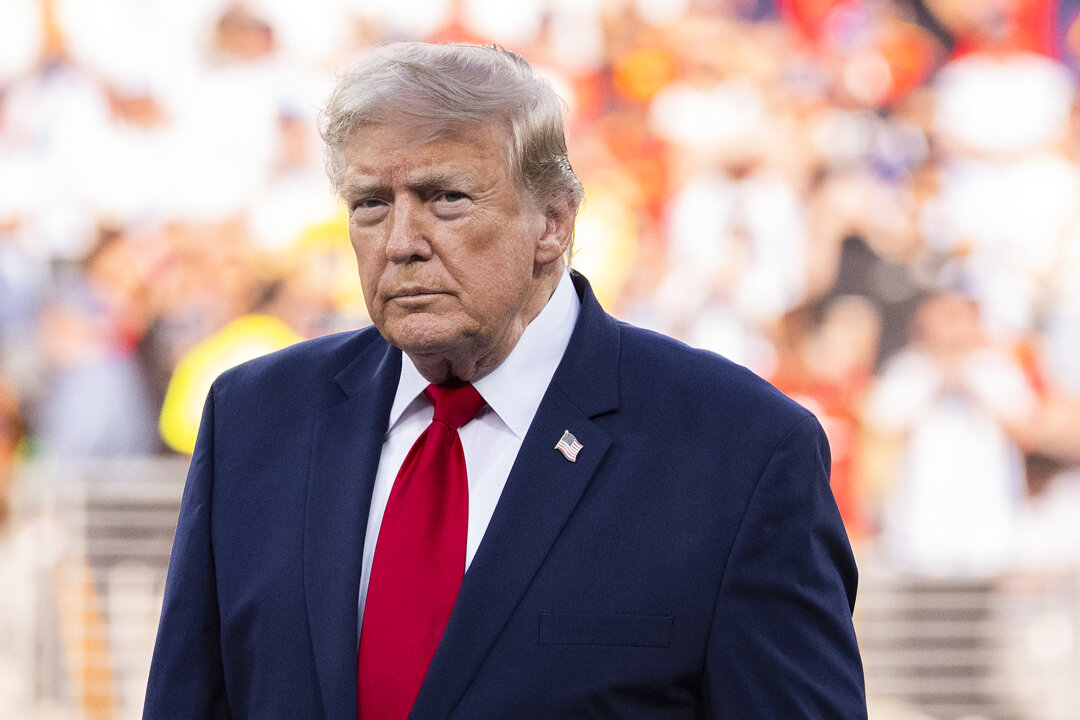
Soon after negotiations collapsed, Trump used a Depression-era law and imposed 50 percent tariffs on a broad range of Canadian goods, from hockey sticks to honey. These levies will take effect on Jan. 1, 2027.
Trump also signed an executive order renaming “Lake Ontario” to “Lake America.”
Carney’s Take
Canadian Prime Minister Mark Carney, in a Sept. 8 video address, warned of tough times ahead, but said his government is prepared to “pivot and prosper.”
“That pivot will come at a cost. There’s always a cost to action. But it doesn’t come close to the cost of standing still,” Carney said in a video posted hours after the counter tariffs kicked in.
He added that the objective of these measures is to make sure “no country can ever hold us hostage, and that we can live how we want to live.”
The prime minister has been working to diversify trade by strengthening ties with the European Union and China.
Last year, EU-Canada goods and services trade surged by 80 percent.
In recent months, Ottawa has sought to boost commodity exports, including agricultural, copper, and energy products. In turn, Beijing is increasing shipments of Chinese electric vehicles.
US–Canada Economic Outlook
Economists and trade groups warn the prime minister’s actions could have consequences for consumers and businesses.
“Avoiding signing a bad trade deal is one thing, but deciding to raise taxes on Canadians is quite another,” Renaud Brossard, vice president of Communications at the Montreal Economic Institute, said in a statement to The Epoch Times.
“The Carney government’s response to U.S. tariffs should focus on building a stronger Canadian economy; unfortunately, retaliatory tariffs will have the exact opposite effect.”
Counter-tariffs could raise domestic inflation by up to 0.3 percentage points, “reducing consumer spending power,” according to a forecast by Sal Guatieri, senior economist at BMO Economics.
If the tariffs remain in place for a year, annual real GDP growth could fall by 0.5 percentage points, and the unemployment rate could rise by 0.2 percentage points.
“The budding momentum in the economy now risks getting zapped by new tariffs and trade policy uncertainty,” he said in a Sept. 4 research note.
While growth prospects rebounded in the second quarter and structural inflation has held steady, the labor market suffered a setback in August.
The Canadian economy lost almost 42,000 jobs, and the unemployment rate remained elevated at above 6 percent.
“It isn’t the impact of tariffs themselves, but the uncertainty surrounding them that is likely hindering hiring decisions,” David-Alexandre Brassard, chief economist at Chartered Professional Accountants of Canada, said in a statement to The Epoch Times.
“This could be an early glimpse of what’s to come in the fall as significantly higher tariffs and counter-tariffs make their way through Canada’s supply chains.”
Loonie, Bombardier in Focus
U.S.–Canada trade strife could take another turn.
In a series of social media posts, Trump took issue with the Canadian dollar and the aerospace manufacturer Bombardier.
“Canada’s Dollar imbalance with the U.S. is unacceptable,” he said in a Sept. 6 Truth Social post. “It has been that way for years—but no longer!”
The U.S. and Canadian dollars were at or near parity between 2007 and 2014. However, over the last decade, the loonie has weakened as much as 40 percent against the greenback.
A weaker loonie makes Canadian exports cheaper to purchase for foreign buyers. At a time when the administration is aiming to reshore U.S. manufacturing, this places a bullseye on Canada’s currency.
The Canadian dollar gained about 0.2 percent against the greenback on Sept. 8.
On Labor Day, Trump targeted Bombardier, writing on Truth Social that its products “aren’t good enough.”
“No more selling Bombardier in the United States,” the president said. “If they want our Market, they must build here, and stop treating America like a ‘piggybank.’”
Shares of Bombardier fell about 3 percent on the Toronto Stock Exchange to kick off the holiday-shortened trading week.
USMCA in Peril
U.S.-Canada trade deliberations being at a standstill could further jeopardize the USMCA.
In July, Washington chose not to renew the post-NAFTA trade agreement. While the trilateral pact does not expire for a decade and negotiators could extend the deal, “the threat of additional tariffs will remain,” economists at RBC Economics said.
“Still, the broader [USMCA] exemption has held through multiple forms of broader U.S. tariff policies, including the current section 301 global tariff measures,” they said in an Aug. 22 research note.
“U.S. average tariff rates globally have been drifting lower rather than higher with the list of broader products exempt from those section 301 tariffs rising to cover the bulk of overall U.S. imports.”
Over the last 18 months, Mexico and Canada have witnessed comparatively modest tariff hikes because continental trade that met USMCA rules kept its preferential access.
Companies reacted by channeling even more shipments through USMCA-compliant pathways, which reduced their overall tariff exposure but increased compliance burdens over time and could push supply chains toward pricier regional sourcing.
That said, the impact of not establishing a deal could differ among countries, Dallas Fed economists said in a paper last month.
“Access to the U.S. market thus matters much more for Mexico and Canada than access to either market matters for the U.S. economy,” they wrote.
Jennifer Cowan and Matthew Harwood contributed to this report.






 English (US) ·
  Turkish (TR) ·