
While the federal government is extending its suspension of the excise tax holiday into 2027, Canadians may not see broad relief at the pump, with global energy pressures continuing to push fuel prices upward.
Ottawa announced on Sept. 2 that it will extend its suspension of the excise tax on gasoline and diesel until Jan. 31, 2027, after the tax holiday was set to expire on Sept. 7. The tax will be reinstated at half its regular rate from Feb. 1 to March 31, before returning to its regular rate on April 1.
Economists say that while the gas tax holiday will provide some price relief to Canadians, risks to global energy markets could continue to push energy prices—and inflation—higher.
Carol Montreuil, vice-president of the Canadian Fuels Association, said the savings of 10 cents per litre are a “welcome relief” for Canadians, but that the conflicts in the Middle East and Ukraine are continuing to contribute to high energy prices.
“People can expect, coming into the fall season, an impact of all these higher [energy] prices on many of the commodities we consume,” he said.
Trevor Tombe, an economics professor at the University of Calgary, concurred that the extension of the gas tax holiday makes sense but said higher energy prices will trickle down into higher inflation for Canadians, particularly at the grocery store.
Dan McTeague, president of Canadians for Affordable Energy, said with U.S. strategic oil reserves falling to multi-decade lows and the conflict over the Strait of Hormuz waterway continuing, oil prices could head even higher in the coming months.
“We’ve been running on emergency supplies now for four or five months. The world’s running out, especially China … They have to come up for air, and that’s likely to lead to a skyrocketing of oil prices that have been so far kept down,” McTeague said.
High Oil Prices
The price of oil skyrocketed in March after the United States and Israel launched strikes
on Iran, which led Tehran to virtually shut down the Strait Hormuz waterway, through which around 20 percent of global oil supplies flow. The price of West Texas Intermediate (WTI)
rose fromaround US$60 in February to over US$100.
While the United States and Iran implemented a ceasefire and signed a potential peace agreement in June, leading WTI to fall to around US$70, negotiations broke down and the two countries returned to strikes.
While the waterway has remained mostly closed due to attempts by Iran to hit ships traversing the Strait, the U.S. military has been escorting some oil tankers out of the strait. With Washington and Tehran recently trading limited strikes, WTI is at around US$90.
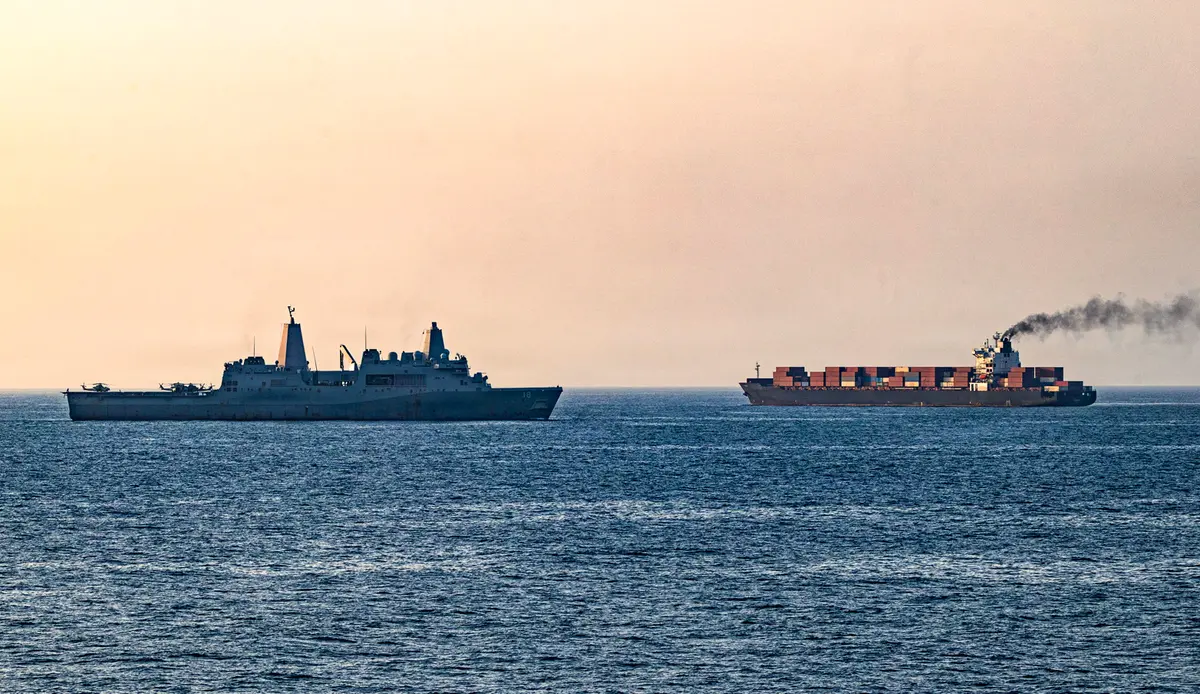
U.S. forces patrol the Arabian Sea near the M/V Touska by the Strait of Hormuz on April 20, 2026. U.S. Navy via Getty Images
At the same time, Ukraine has resumed its drone attacks on oil and gas facilities across Russia, while Russia has banned exports of gasoline and diesel until Jan. 31, 2027.
Back in March, members of the International Energy Agency (IEA) agreed to release 400 million barrels of oil from reserves to address rising oil prices, which was the largest release in history. The United States agreed to
release172 million barrels from its reserves, which have fallen to
around 286 millionbarrels as of Aug. 28, which is the lowest inventory level since 1982.
Canada committed to release 23.6 million barrels, but it does not have a strategic oil stockpile,
and instead pledgedto release the oil through additional exports.
Relief
The federal government suspended the federal fuel excise tax on gasoline, diesel, and aviation fuel across Canada on April 20, which was set to last until Sept. 7.
When announcing the extension of the tax holiday, Finance Minister François-Philippe Champagne said this would mean continued savings of 10 cents per litre on gasoline and unleaded aviation gasoline, and four cents per litre on diesel and aviation fuel.
The average price of gasoline across Canada is $1.76 per litre for gasoline.
Montreuil said that while the gas tax holiday extension would bring price relief for Canadians, gas prices in Canada will likely remain elevated as long as the conflicts in Iran and Ukraine continue. He said while an end to one or both wars could cause energy prices to fall, their continuation would leave global energy inventories at the lowest levels in more than 30 years, right as harvest season begins for Canadian agricultural producers.
Montreuil said the energy crisis is being seen particularly in diesel prices, which recently reached an all-time high
of $4.68, while oil prices have not yet breached all-time highs in 2026.
“We know how important diesel is for agriculture, for the transportation of everything, whether it’s trucks, marine, rail,” Montreuil said. “All of a sudden, people are starting to understand that these higher prices on diesel, in particular, will trickle down in everything we consume.”
McTeague pointed out that thegovernment is still maintaining the clean fuel standard, which adds 8 cents a litre to gas prices and around 13 cents a litre to diesel prices.
The Conservative Party has called for the federal government to suspend all federal taxes on gas and diesel until at least Canada Day, 2027, which could mean savings of 25 cents a litre at the pump.
McTeague also said elevated prices of diesel, a fuel he calls the “global workhorse,” is an “unwelcome and very disturbing omen.” He said diesel consumption will increase as farmers harvest their crops and colder weather drives Canadians to use more heating.
“I’m very worried about colder weather, and I’m worried about what’s going to happen with diesel,” he said. “Policymakers better not ignore this one, especially when it comes to facile, irrelevant trimming around the edges with excise taxes that amount to a rounding error.”
Tombe said extending the federal government’s gas tax holiday makes sense, as higher tax revenues from oil and gas companies could offset the lost revenue from the fuel tax.
Tombe also noted that WTI Futures show prices declining to nearly $70 by September 2027, but said that “nobody knows because it depends on all these unforeseeable developments, including decisions taken both by the U.S. and Iran, so anyone’s hanging their head on any particular number, they’re taking a gamble.”
When it comes to prices, Tombe estimates that gasoline and fertilizer prices both rising by 50 percent would raise consumer inflation by 1.2 percentage points, and that food prices would be “particularly exposed.”
“So for the typical household, that’s about $1,000 a year in additional costs. Half of that is energy, and the other half are all these indirect effects,” he said.
Canada’s inflation rate hit 3.2 percent in May, fell to 2.8 percent in June, and rose again to 3.0 percent in July, according to Statistics Canada. But food inflation remained higher for those months, sitting at
4.3 percentin May,
3.9 percentin June and
3.1 percentin July.







 English (US) ·
  Turkish (TR) ·