
Commentary
The much-vaunted Pacific Link pipeline could leave Canadian taxpayers on the hook for tens of billions of dollars, even though a much cheaper alternative for exporting Alberta’s oil already exists.
That alternative is a proposal from America’s Bridger Pipeline, partnered with Canada’s South Bow. President Donald Trump has already granted a permit for its Canada–U.S. border crossing, although other approvals remain outstanding.
Bridger would initially transport 550,000 barrels of oil daily from Alberta to Wyoming, with capacity eventually exceeding a million barrels. Much of its route follows existing pipeline corridors, helping keep costs down. It could be completed by early 2029 for about CA$3 billion. That’s a rounding error compared with Pacific Link.
Alberta estimates Pacific Link could cost as much as $43.7 billion, with completion targeted for 2032. I wouldn’t count on that timetable. Construction delays, inflation and financing costs could push the bill towards $50 billion and completion into 2034 or later. Bridger could be carrying oil years earlier.
Pacific Link would provide access to overseas buyers, while Bridger would expand access to the United States. But how much is that difference worth? I’ve seen nothing to convince me it’s worth spending tens of billions more.
Supporters argue that overseas sales could narrow the price gap between Western Canadian Select (WCS) and West Texas Intermediate (WTI). The discount reached US$21.35 per barrel in September, partly because of refinery maintenance and pipeline constraints. But WCS is heavier and higher in sulphur than WTI. Another pipeline might ease transportation constraints, but it wouldn’t change the oil. How much of that discount could Pacific Link realistically eliminate?
Another argument is that Canada must reduce dependence on the United States, evidently regardless of cost and geography. Diversification makes sense, particularly given President Trump’s tariffs. But Canadian taxpayers shouldn’t have to spend tens of billions simply to reduce dependence on a market that already buys our oil. That’s an expensive way to make a political point.
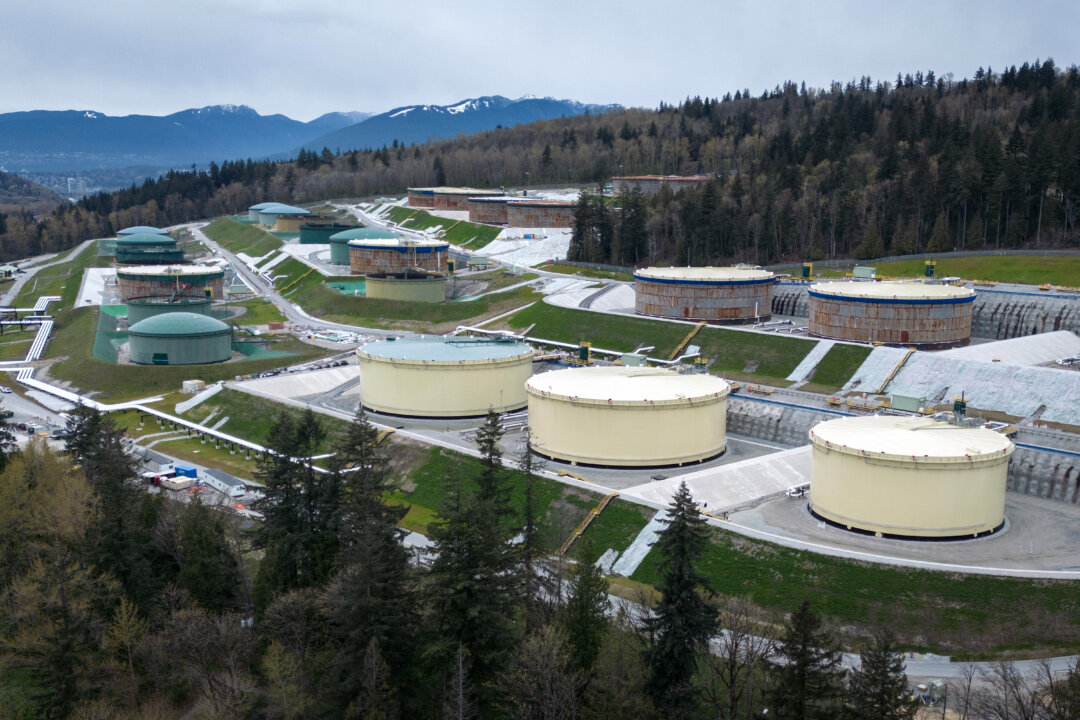
We’ve already seen what can happen with an expensive pipeline. Trans Mountain cost taxpayers some $35 billion and reported net income of $556 million in 2025. But Thomas Gunton, a professor at Simon Fraser University, argues that its reported profits are misleading because much of its debt sits with TMP Finance. The interest still has to be paid. Gunton estimated that, accounting for those costs, the pipeline lost about $166 million in the first six months of 2025.
Trans Mountain’s tolls are also substantially higher than those on competing Enbridge pipelines to the United States. Why would producers pay more if cheaper transportation is available?
In 2024, the Parliamentary Budget Officer valued Trans Mountain at between $29.6 billion and $33.4 billion. I doubt it would fetch anything close to that. A more realistic estimate may be $20 billion. A sale at that price could leave taxpayers with a loss of about $15 billion, depending on how the outstanding debt was handled.
Given that experience, I doubt arm’s-length investors would pay anything close to Pacific Link’s construction cost.
Ottawa claims Pacific Link could generate more than $20 billion annually in GDP and $100 billion in government revenue by 2060. But those aren’t profits from operating the pipeline. They don’t establish that taxpayers would recover their investment.
There’s another wild card: What happens to oil prices when Pacific Link comes on stream? Producing oil from new oilsands mines can cost about US$55 per barrel, compared with around US$35 for oil extracted underground using wells. A sustained price below US$40 could threaten the economics of much of the production Pacific Link would depend on.
What happens if production recovers in Venezuela, Iran, Iraq, Russia or elsewhere? Oil prices have collapsed before. If falling prices make additional oilsands production uneconomic, who will fill Pacific Link? And who will pay for the unused capacity?
Then there’s the Pathways Alliance carbon-capture project. Ottawa and Alberta have explicitly recognized that Pathways and Pacific Link are mutually dependent. Its planned annual CO₂ capture target has already been reduced from 22 million tonnes to six million tonnes.
Cenovus CEO Jon McKenzie once put Pathways’ cost as high as $30 billion, before the project was scaled back. Add that earlier estimate to Pacific Link’s possible $50 billion cost, and the combined investment could approach $80 billion. Not all of that would fall on taxpayers, but government tax credits and other support would leave them bearing part of the cost.
And what would those investments ultimately be worth? Trans Mountain provides little reassurance that their market value would come close to what was spent.
None of this means Canada should never build another pipeline to the Pacific. But until Ottawa demonstrates that Pacific Link is worth the additional cost, taxpayers would be taking an enormous financial gamble.
It’s weird that nobody calls Carney out for saying: “The Canadian taxpayer is going to make a lot of money on this pipeline.” How could that be with its potentially enormous cost, delayed construction, a questionable future price of oil, and a much cheaper export alternative already on the table?
Colin Alexander was publisher of the Yellowknife News of the North and the advisor on education for Ontario’s Royal Commission on the Northern Environment. He writes for the Frontier Centre for Public Policy.
Views expressed in this article are opinions of the author and do not necessarily reflect the views of The Epoch Times.








 English (US) ·
 Turkish (TR) ·
