
Commentary
Financial crime rarely respects international borders, although responsibility for detecting it remains largely national. Transactions may pass through banks and companies in several countries before investigators identify their origin or destination. Recent U.S. enforcement actions involving Bank of America and TD Bank offer a useful comparison, particularly for Canada, where financial crime can affect economic security.
On Oct. 13, the U.S. Treasury announced penalties exceeding US$1.21 billion against Bank of America for anti-money-laundering and sanctions failures. Regulators described more than US$5 billion in suspicious activity that was not reported on time, as well as weaknesses in identifying transactions associated with Chinese money-laundering networks and illicit finance along the U.S.-Mexico border. Separate sanctions matters involved programs concerning Russia and Iran. These were separate findings, not evidence of one conspiracy.
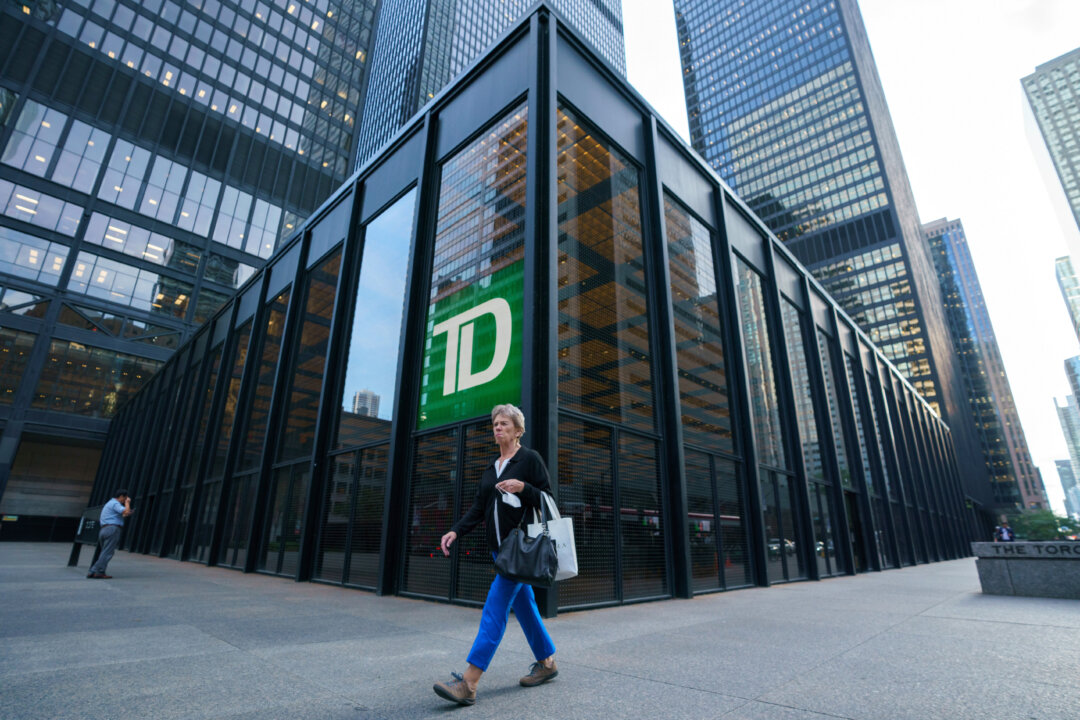
The announcement recalls TD Bank’s October 2024 settlement with American authorities, which totalled approximately US$3.09 billion across criminal and regulatory actions. TD’s U.S. banking subsidiary pleaded guilty to money-laundering conspiracy and Bank Secrecy Act offences. According to the U.S. Justice Department, prosecutors found that three laundering networks moved more than US$670 million through TD accounts between 2019 and 2023. One of those networks received assistance from five bank employees.
FINTRAC separately fined TD CA$9.185 million in 2024 for administrative compliance violations in Canada, distinct from the American criminal proceedings.
Though the two investigations have not established a common criminal network, they nevertheless expose a shared vulnerability: financial institutions can become conduits for illicit funds when internal controls fail to keep pace with the volume and complexity of transactions. The issue extends beyond filing reports to ensuring timely scrutiny and action.
Understanding the wider problem requires looking beyond individual accounts. Professional laundering operations may involve brokers, exporters, importers, shell companies, and informal value-transfer arrangements. Participants do not necessarily know every other participant, and transactions that appear commercially ordinary in isolation can serve a different purpose when viewed together.
U.S. authorities have described a particularly significant relationship between Mexican drug-trafficking organizations and Chinese professional money-laundering networks. Cartels need to convert proceeds from drug sales into usable funds, while some individuals seek ways around Chinese restrictions on moving money abroad. Intermediaries can match those demands using cash exchanges, third-party payments and offsetting transfers. In such arrangements, the money and the corresponding financial value need not travel along the same route.
The scale remains uncertain. In August 2025, the Financial Crimes Enforcement Network reported analyzing 137,153 financial reports associated with approximately US$312 billion in suspected Chinese money-laundering network activity from 2020 through 2024. This represents reported suspicious transactions, not proven criminal proceeds. Trade-based schemes can further complicate tracing by routing value through vehicles, merchandise, and invoices rather than straightforward bank transfers.
Canada has its own evidence of these cross-border connections. Its 2025 national money-laundering risk assessment describes the RCMP’s Project Collecteur, which exposed an informal transfer network with connections to China, Iran, Lebanon, the United Arab Emirates, and the United States. According to the assessment, funds were returned to cocaine exporters in Colombia and Mexico. The investigation illustrates how activity originating in one country can be facilitated through apparently unrelated commercial and financial relationships elsewhere.
These connections also raise questions beyond conventional organized crime. Research on hybrid warfare examines how state actors may exploit economic relationships, criminal intermediaries, and institutional weaknesses to pursue strategic objectives. Canada’s risk assessment explicitly acknowledges that foreign states can use existing, sometimes criminal, networks to obscure funding for foreign interference.
That possibility must be distinguished from an allegation of state control. Chinese professional money-laundering networks are not necessarily directed by Beijing, and neither the TD nor the Bank of America findings establish such direction. The significance lies in the potential reuse of financial channels for different purposes, from criminal profit to covert influence, and in the need to investigate each claim on its evidence.
The corporate governance implications are equally important. TD failed to subject approximately US$18.3 trillion in transaction activity to appropriate automated monitoring, a measure of the oversight gap rather than the amount laundered. Bank of America also faced findings concerning unresolved warning signs and inadequate responses to suspicious activity. Both raise questions about whether executives and boards adequately support compliance.
For Canada, more effective responses would involve coordinated financial intelligence, scrutiny of beneficial ownership, and closer cooperation among banks, FINTRAC, police, border authorities, and international partners. These measures should also protect legitimate trade, privacy and due process. Neither nationality nor commercial links to a particular country should substitute for evidence of wrongdoing.
The two banking cases involve different misconduct and different institutions. Together, they illustrate a persistent gap between financial networks that operate internationally and oversight systems that still depend heavily on national boundaries. Narrowing that gap is as much a matter of institutional accountability and economic resilience as it is of law enforcement.
Views expressed in this article are opinions of the author and do not necessarily reflect the views of The Epoch Times.







 English (US) ·
 Turkish (TR) ·
