
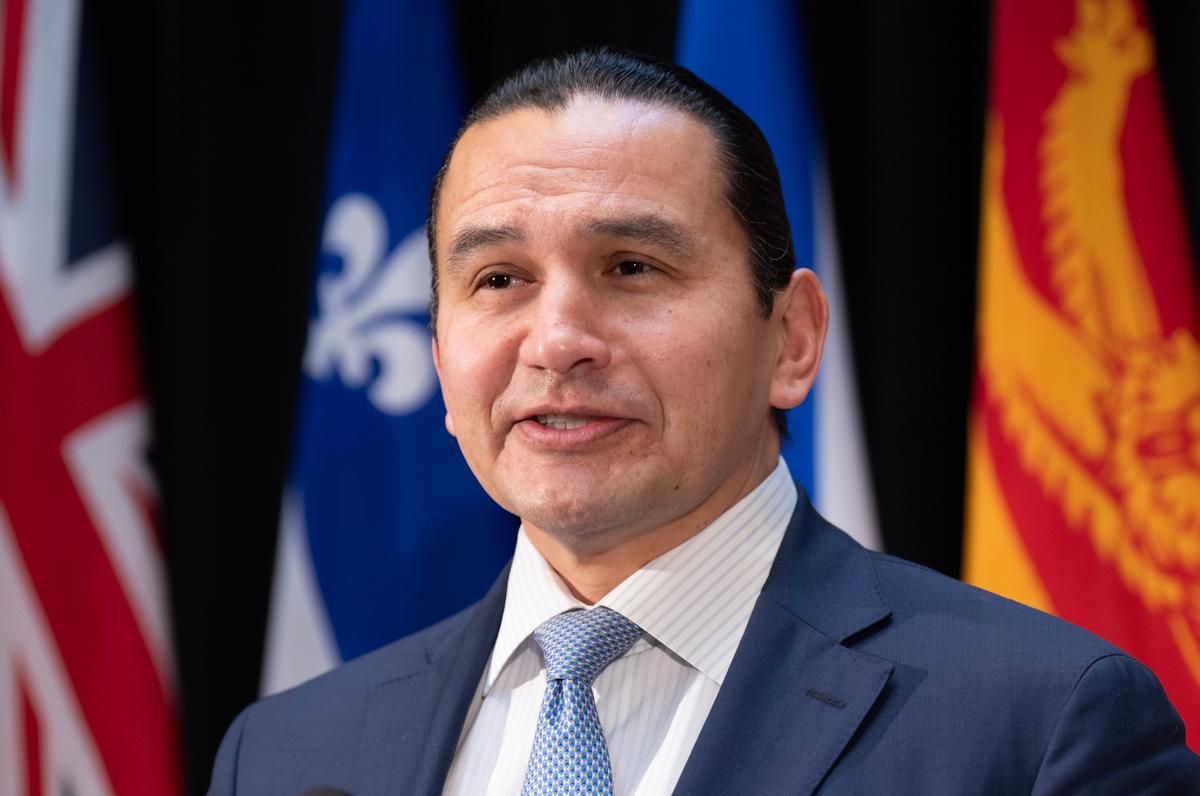
Manitoba Premier Wab Kinew speaks with reporters before the first ministers meeting in Ottawa, Jan. 29, 2026. The Canadian Press/Adrian Wyld
Manitoba is set to remain on daylight time permanently, following Saskatchewan, Alberta, British Columbia and Yukon, which have already ended the twice-yearly clock changes, the province announced.
Manitoba Premier Wab Kinew made the announcement on Sept. 17, noting that residents had decisively backed the shift to year-round daylight saving time (DST).
A survey conducted by Prairie Research Associates for the province found that 92 percent of Manitobans wanted to end seasonal clock changes and 58 percent of those respondents favoured permanent DST. The survey, which was launched in May, also found 34 percent of respondents preferred to maintain standard time.
“We heard from Manitobans loud and clear—no more changing the clocks in Manitoba,” Kinew said in a press release. “Permanent daylight saving time is good for our health, good for business and good for parents. For families, especially those with young kids, that one-hour shift can disrupt sleep and routines for days. This change means one less adjustment families have to deal with each spring and fall.”
The Manitoba survey featured a five-page fact sheet detailing the health effects of time changes. It said time changes lead to “short-term negative population health consequences,” compared to permanently staying on either standard or daylight saving time.
The Manitoba government is working closely with organizations, businesses, and industry partners as it moves forward with establishing permanent daylight saving time, the premier added.
Support for ending seasonal time changes in Manitoba reflects broader sentiment across Canada. An Angus Reid survey conducted in the spring found that 86 percent of Canadians supported permanently ending the twice-yearly clock changes.
Clocks traditionally spring ahead one hour on the second Sunday of March and fall back one hour on the first Sunday of November in the majority of Canadian provinces and territories. But that tradition has begun to change in Western Canada.
British Columbia Premier David Eby announced in March that provincial residents had set their clocks forward by one hour for the last time this year, and would remain on daylight saving time permanently.
The Alberta government was next, announcing in April a plan to introduce legislation to end the practice of clock changes and permanently move to daylight time. Service Alberta Minister Dale Nally said the province would stay on its summer time permanently, officially branding the zone as “Alberta Time.”
The Northwest Territories will also implement permanent daylight time after 87 percent of its residents voted to end clock changes.
The three regions will join Saskatchewan and Yukon in abandoning clock changes. Saskatchewan stopped switching to daylight saving time in 1966 and remains on Central Standard Time year-round. An exception is the city of Lloydminster, which sits on the Alberta border, and observes daylight saving time to stay aligned with Alberta. Yukon has operated on a permanent, year-round time standard since March 2020.
Kinew had previously dismissed the idea of ending time changes in March, following the B.C. announcement, saying that Manitoba had more pressing issues to address. He changed his stance later that spring, indicating that it might be the right time to reconsider the matter.






 English (US) ·
  Turkish (TR) ·