
 50 minutes ago
23
The US diplomat’s India trip is about leveraging Mukesh-Ambani owned Reliance’s refining capacity to lower elevated global fuel prices
After spending years pressuring New Delhi to cut back its Russian oil purchases, and isolate Moscow, Washington has now changed tack and is seeking India’s help to bring down elevated domestic fuel prices that are largely of its own making.
US Secretary of State Marco Rubio, who skipped New Delhi entirely on his second visit to India this year, made clear what had brought him to the country – the massive refining capacity of Reliance Industries, owned by billionaire Mukesh Ambani.
“I’m also here in my capacity as the National Security Adviser,” Rubio said in Mumbai. “Energy is related to national security … we’re going to go see a company that has a tremendous amount of refining capability.”
President Donald Trump’s administration is showing a new urgency to bring down the high fuel prices that threaten Republicans’ prospects in November’s midterm elections. US retail diesel prices reached a record average of about $6.32 a gallon on Tuesday.
American refineries are already operating at close to capacity, and Washington is working with India to increase refining output and bring more petroleum products to global markets, US Energy Secretary Chris Wright said in Houston the same day.
“Energy politics is inseparable from American geopolitics,” Jindal School of International Affairs adjunct professor and former Jawaharlal Nehru University professor Anuradha Mitra Chenoy told RT. “The US is using energy as a geopolitical instrument, and that is central to understanding Rubio’s visit.”
From Russian oil tariffs to Venezuelan crude
Washington has regularly used energy sanctions to achieve its geopolitical aims. First it took Iranian, and then Venezuelan, crude off the market with the threat of sanctions. Since the Ukraine conflict began, Washington also pressured India to stop buying Russian crude. The argument was that choking off Moscow’s oil revenues would help end the conflict, which is now in its fifth year.
At the same time, the US continued to supply Ukraine with weapons and funds, and started a war with Iran that disrupted energy supplies from the Middle East.
New Delhi has maintained that providing affordable energy to its 1.4 billion people is central to its oil-purchasing decisions. India imports about 85% of its energy requirements, and Russia remains one of its biggest sources of oil.
But the pressure reached a breaking point when the US Congress passed a law last month that threatened “bone-crushing sanctions” on major buyers of Russian energy. New Delhi warned that the proposed measures could affect bilateral relations and global energy markets.
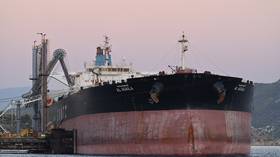
However, as the affordability crisis in America got worse, and Trump’s rhetoric failed to bring down domestic fuel prices in a connected global market, the administration swiftly changed course.
Trump announced a deal with Russia to buy diesel for the domestic market. And cleared the deck for Rubio’s visit by waiving off sanctions on Moscow’s top oil buyers – which includes China and India, allowing Russian oil to flow more freely into global markets.
“None of these tariffs are meant to punish or harm India,” Rubio said in Mumbai, adopting a more conciliatory tone than has come out of Washington until recently.
Why Reliance, and Jamnagar, matter to Washington
Washington’s top diplomat held talks with Mukesh Ambani at Jamnagar in India’s Gujarat state on the second day of his visit. The Reliance refinery in Jamnagar is the largest single-site refining complex in the world, and can process around 1.4 million barrels of crude a day.
It is also one of the few facilities capable of processing large volumes of Venezuela’s extra-heavy crude, which is good for producing diesel – showing its importance to a US administration worried about domestic fuel prices.
Jamnagar already plays a major part in keeping global fuel prices in check – by selling fuel refined from Russian crude to markets including Europe, which sanctions the same crude.
And it is buying more Venezuelan oil, accounting for more than 74% of the nearly $3.6 billion worth of Venezuelan crude imported by India between April and August, according to figures shared by the Global Trade Research Initiative (GTRI) think tank.
Rubio wants Reliance to buy, and process, more of the Venezuelan crude, which the US now controls after kidnapping the country’s President Nicolas Maduro.
“The refining capability exists,” GTRI founder Ajay Srivastava told RT. “The question is whether expanding purchases makes commercial sense.”
Venezuelan crude is cheaper but it also costs more to refine, he pointed out. He also questioned the wisdom of India buying more of the South American country’s oil, which was once subjected to US sanctions.
“It would be very unwise for India to stop using Russian oil,” Chenoy said, pointing out that there are only a limited number of major sources available internationally, and Russia remains one of the most important.
Reliance is also involved in a proposed refinery project in Brownsville, Texas, under a long-term agreement to purchase its output. The facility, which Trump called a $300 billion project in March, is designed to process lighter American shale crude.
The Indian conglomerate “helps utilize and unleash the energy that is being developed in the Western Hemisphere,” Rubio told the Indian Express, describing his visit as an opportunity to identify ways of diversifying energy supplies.
Rubio dodges a Musk-ignited controversy
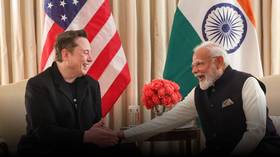
Ahead of his meeting with Ambani, Rubio had to sidestep the controversy ignited by trillionaire Elon Musk.
The world’s richest man, a prominent donor to the Republican party, had accused Ambani earlier this month of obstructing the launch of his Starlink satellite internet service in India.
Musk targeted Ambani, sarcastically addressing him as “Prime Minister Ambani” and questioning whether his company would allow Starlink to compete in the country.
Starlink, Ambani’s Jio Satellite Communications, and Bharti Group-backed Eutelsat OneWeb are all at broadly the same stage of regulatory approval for satellite internet connectivity in the country, with security assessments underway, according to India’s Communications Ministry.
Reliance also dismissed suggestions that it was blocking competition.
“Elon Musk is a private citizen,” Rubio told the Indian Express, adding that Musk had the right to express his views.
Rubio also sought to assuage concerns about the India-US trade deal, which has been holding fire despite months of tortuous negotiations. Indian Finance Minister Nirmala Sitharaman described the talks as deadlocked earlier this month, saying both sides were finding it “very difficult” to make further concessions.
“We are weeks, not months, away from, I think, finalizing it,” Rubio said. “I would say we are about as close as you can be without having executed the agreement.”
India has been holding off on finalizing the deal as it wants to lock in a competitive advantage in the US market relative to rival exporter nations.
Pragmatism back on the table
The US administration turning on the charm, so to speak, suggests that Washington’s energy and political interests are taking precedence over its geopolitical considerations and moral grandstanding.
With pragmatism back on the table, Rubio’s visit could mark a step toward easing bilateral tensions and strengthening cooperation beyond the immediate fuel crisis driving the change.
Still India must “carefully examine what it is being asked to commit to, what commercial benefits it can expect, and the risks of future changes in US policy,” Srivastava said.









 English (US) ·
 Turkish (TR) ·
