
The G7’s latest release of emergency oil reserves could provide temporary relief from high diesel prices, but energy experts say continuing shortages of refined fuels threaten to keep transportation costs and inflation elevated.
With oil prices above US$100 a barrel, the G7’s Oct. 2 announcement that member countries would release 100 million barrels of oil from their strategic reserves, including “substantial” amounts of diesel, put “almost immediate” downward pressure on diesel prices, according to Carol Montreuil, vice president of the Canadian Fuels Association.
However, the problem facing many countries is a shortage of diesel and other refined petroleum products rather than crude oil, Montreuil told The Epoch Times.
Warren Mabee, the director of Queen’s University’s Institute for Energy and Environmental Policy, said the release of diesel could bring prices down, but the extent of the relief depends on “how much fuel they’re willing to throw into the marketplace.”
Meanwhile, Dan McTeague, president of Canadians for Affordable Energy, said the G7 announcement is “window dressing” that will not resolve the global deficit of diesel.
“You can pull out all the stops you want, but we’re running out of options after eight months, not just with respect to the Persian Gulf, but also what’s happening in the Red Sea, further layered over with what’s happening in Ukraine,” McTeague said.
Fuel Shortages
When the U.S.-Iran conflict began in late February, Iran restricted shipping through the Strait of Hormuz, a route that normally carries a fifth of global oil and liquefied natural gas shipments. The U.S. military has been able to escort oil tankers through the strait in recent months, alleviating some of the pressure on energy markets.
Ukrainian attacks on Russian oil terminals, as well as Houthi attacks on Saudi Arabian oil tankers and pumping stations along the nation’s East-West pipeline, have also contributed to elevated energy prices.

Oil reservoirs are seen in fire after the drone reached Klintsy, a city in Bryansk Region of Russia, about 60 kilometers from the Russia-Ukrainian border In this photo taken from video on Jan. 19, 2024. Governor of Bryansk Region Alexander Bogomaz telegram channel AV BogomaZ via AP
The International Energy Agency (IEA)
said in itsSeptember market report that the world’s total oil supply is set to fall about 5.4 percent to 100.7 million barrels per day in 2026. The 32 members of the IEA had announced they would release around 400 million
barrels of oil inMarch, helping alleviate energy pressures.
However, the IEA noted that the rise in oil prices “pales in comparison” to increases in refined products. The report said diesel prices in the United States are 94 percent above pre-war levels, compared with an increase of about 45 percent for crude oil.
Montreuil said the diesel shortage poses a greater threat to the world economy than the loss of crude oil. Mabee described diesel as a “foundational piece of our economy,” and said a shortage will lead to higher prices for many goods.
Diesel is used for heavy transportation, agriculture, and power generation. Diesel futures are at all-time highs, at nearly
$5 per galloncompared to around $2.30 before the U.S.-Iran War.
“[Diesel] is what we need to move goods, and it’s what we need to build things,” Montreuil told The Epoch Times. “And suddenly, it’s not available at the price that we’re used to. We’re going to suffer those inflationary impacts.”
Latest G7 Release
The Oct. 2 G7 announcement did not represent an entirely new commitment to release emergency oil reserves. It was tied to the remaining portion of the 400 million barrels pledged by the IEA members in March. According to an internal IEA document,
326 millionbarrels of the pledged amount had been released.
Still, Montreuil noted that
diesel futures fellaround 5.6 percent after the announcement. He welcomed the drop but said oil prices remained high and the world was still “in the middle of an historical crisis.”
Montreuil also said further upward pressure on oil prices could be on the way, given that energy inventories are typically built up ahead of winter. He said while much of Canada uses hydroelectricity and is less vulnerable, Europe relies more on imported natural gas.
Mabee said the G7 release could lower diesel prices by 10 or 20 cents a litre, depending on how much of the fuel is actually released, “and that is something that nobody has been clear on.”
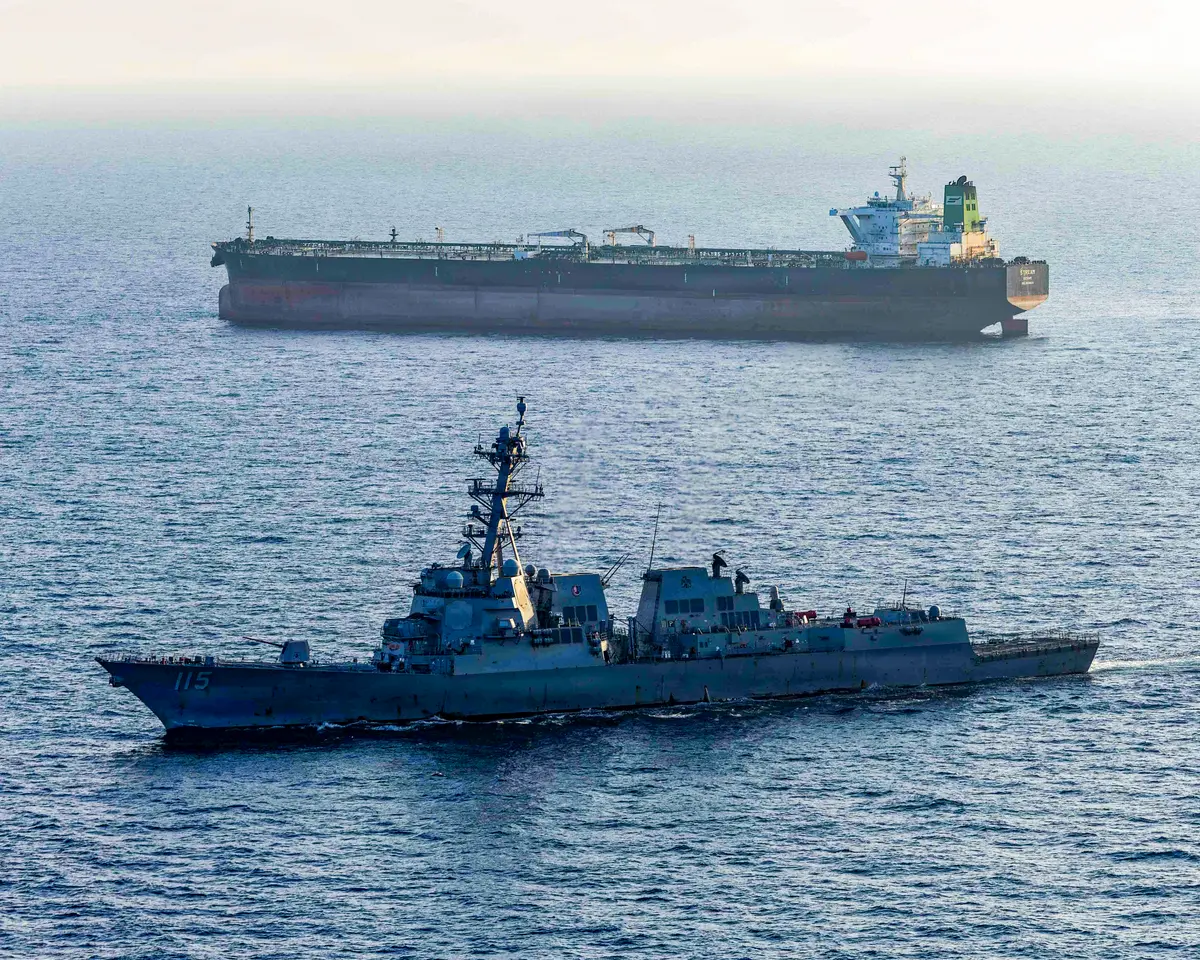
Ships in the Strait of Hormuz, on April 26, 2026. U.S. Navy via Getty Images
Mabee warned that if the conflicts in the Middle East and Europe continued without significant change, energy prices would remain elevated and inflationary pressures would increase.
“We’re going to suffer those inflationary impacts. I don’t think this release is going to make a substantive change to that,” Mabee said.
McTeague, meanwhile, said the G7 announcement would not bring down oil and diesel prices, as the crisis stemmed not only from disrupted exports but also from damage to energy infrastructure in the Middle East and Russia.
McTeague said further reductions in taxes on gas and diesel would lower prices, but Ottawa has chosen not to do this.
On Oct. 7, the
Liberals votedagainst a Conservative motion to eliminate federal taxes on diesel sales until July 1, 2027, and end the industrial carbon price and Clean Fuel Regulations.
The federal government suspended the federal fuel excise tax on gasoline, diesel, and aviation fuel across Canada from April 20 to Sept. 7. On Sept. 2, Ottawa extended the suspension until Jan. 31, 2027, followed by a 50 percent reduction in the regular rate from Feb. 1 to March 31, 2027, before the full rates resume April 1.
McTeague also suggested that the G7 announcement was another example of attempts to “jawbone” oil markets and convince traders to push prices lower.
“Unlike oil, you can’t fool around with diesel. You put diesel in your fuel tank. You don’t put paper futures, or options, or derivatives in your gas tank,” McTeague said.






 English (US) ·
 Turkish (TR) ·
