
The U.S. Embassy in Cuba has issued a health alert, warning Americans about a rise in gastrointestinal illnesses caused by the island nation’s water and energy grid collapses.
“The U.S. Embassy has noted a significant increase in diarrheal illness across Cuba, associated with the continuing degradation of the water and energy infrastructure,” according to the alert published on Sept. 4.
The embassy said the degradation impacted the country’s water supply, food storage, and temperature control, sparking infections such as E. coli, norovirus, Shigella, and other gastrointestinal pathogens.
Americans are urged to “be cautious” around meat, poultry, seafood, eggs, dairy, and other perishable foods that have not been stored properly.
People are also encouraged to stay away from foods that have been at room temperature for a long time, avoid eating raw or improperly washed vegetables, and to be careful before they eat any cooked food that had cooled and then was reheated.
Frequent hand washing was also encouraged.
Embassy officials encouraged people to stay hydrated and “seek medical attention for persistent or severe diarrhea, bloody stools, high fever, significant abdominal pain, repeated vomiting, signs of dehydration, or symptoms not improving.”
On Aug. 28, U.S. embassy officials warned that Cuba’s water delivery infrastructure was growing increasingly unstable as some neighborhoods reported going long periods without receiving water from the regime.
Officials suggested the water issues and power outages were caused by the communist regime’s “mismanagement of public infrastructure” across the entire island.
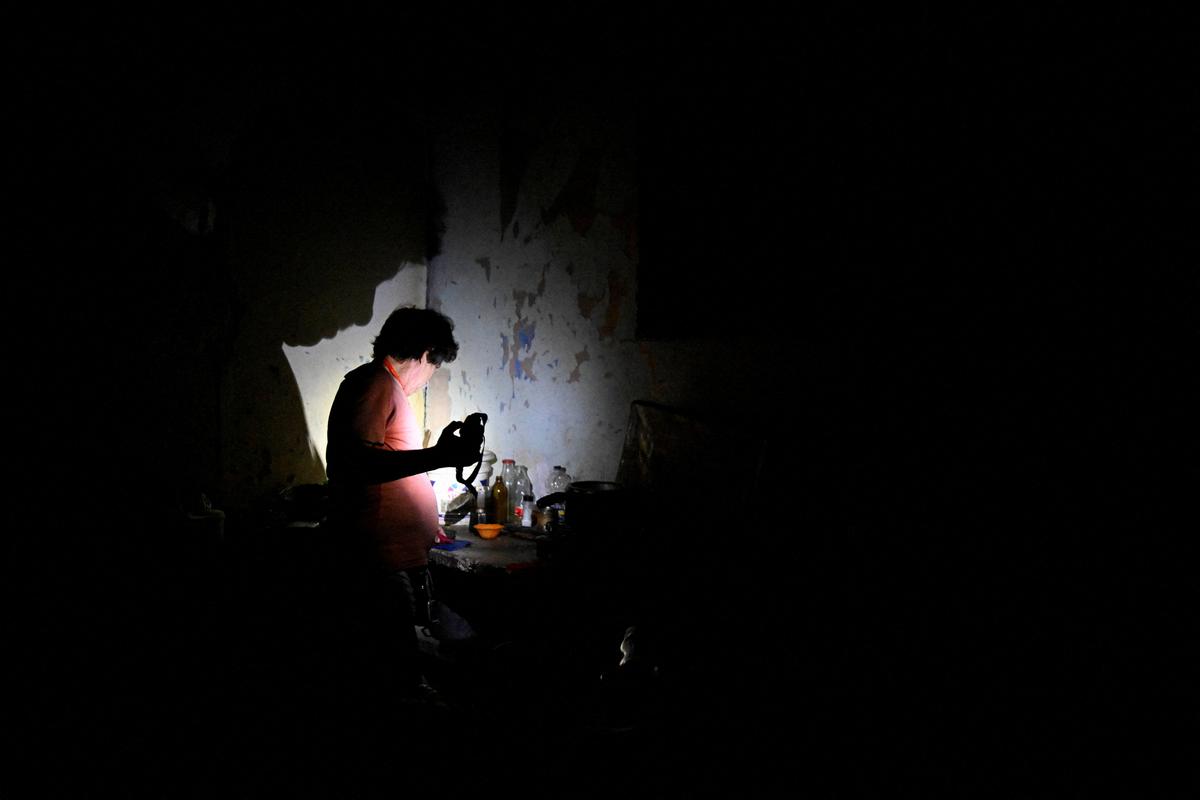
A man uses a flashlight during a blackout as Cuba's national electric grid collapsed, according to the country's grid operator, leaving around 10 million people without power amid a U.S.-imposed oil blockade, in Havana, Cuba. Norlys Perez/Reuters
“Water often only flows to residences when city power is on for a sufficient amount of time,” the August alert stated.
Eight months ago, the Trump administration started a fuel blockade on Cuba to force negotiations around returning democracy to the island, including allowing Cuban exiles to return to vote for the first time since the communist takeover in 1959.
The blockade cut off oil deliveries to Cuba from Venezuela’s socialist regime. Meanwhile, the island faces an energy crisis that has left around 10 million people in the dark multiple times this year.
Energy authorities reported two nationwide grid collapses in March and three in July, along with several partial outages.

People gather outside a building during a blackout in Havana on March 16, 2026. Adalberto Roque/AFP via Getty Images
U.N.-appointed human rights experts said in February that the fuel blockade was a serious violation of international law.
However, in March, U.S. Secretary of State Marco Rubio said Cuba’s grid has long been unreliable due to years of neglect by the regime.
“They were having blackouts last year,” Rubio said. “They’re having blackouts because they have equipment from the 1950s in their grid that they’ve never maintained and never upgraded, because they’re incompetent.”
Reuters contributed to this report.



 English (US) ·
  Turkish (TR) ·