
 9 months ago
120
9 months ago
120
World·New
The U.S. military is holding two survivors aboard a navy ship after rescuing them from a suspected drug vessel in the Caribbean hit by a U.S. strike that killed two others, three sources familiar with the matter told Reuters on Friday.
There had been no known survivors until now across 6 deadly military strikes that have killed at least 27
Thomson Reuters
· Posted: Oct 17, 2025 12:53 PM EDT | Last Updated: 7 minutes ago

The U.S. military is holding two survivors aboard a navy ship after rescuing them from a suspected drug vessel in the Caribbean hit by a U.S. strike that killed two others, three sources familiar with the matter told Reuters on Friday.
The disclosure, which has not been previously reported, raises the possibility that the survivors from Thursday's strike are the first prisoners of war in a conflict declared by President Donald Trump against a "narcoterrorist" threat he says is emanating from Venezuela.
The Pentagon did not immediately respond to a request for comment.
WATCH | Questions abound about Venezuela drug exports, enemy combatants: Why Trump is at war with Venezuela | About That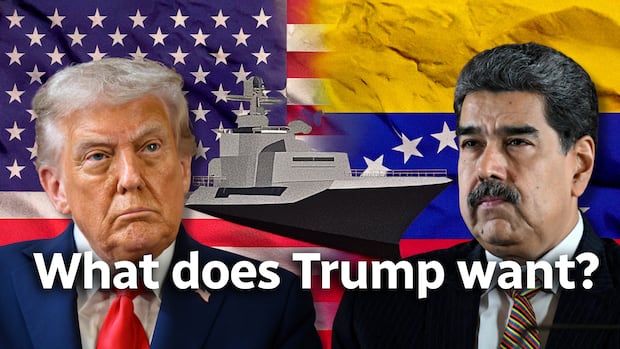
Prior to Thursday's operation, U.S. military strikes against suspected drug boats off Venezuela had not left any known survivors.
The strikes began in early September. Videos presented by the Trump administration have showed vessels being destroyed, but information about the identities of individuals or the cargo on the boats has not been released publicly by the administration.
U.S. lawmakers asking questions
The Trump administration has said the previous strikes killed 27 people, raising alarms among some legal experts, many Democratic lawmakers and at least two Republicans, Sen. Rand Paul, of Kentucky, and Sen. Lisa Murkowski, of Alaska. Critics question whether the strikes adhere to the laws of war.
On Wednesday, Trump disclosed he had authorized the Central Intelligence Agency to conduct covert operations inside Venezuela, adding to speculation in Caracas that the United States is attempting to topple Venezuelan President Nicolas Maduro.
The Trump administration in August doubled its reward for information leading to Maduro's arrest to $50 million US, accusing him of links to drug trafficking and criminal groups that Maduro denies.
Trump has repeatedly accused Venezuela of being a hub for trafficking of the deadly drug fentanyl, but U.S. records have shown that Mexico is the main source of fentanyl. Historically, Venezuela's main illegal drug export has been cocaine.
WATCH | U.S. views Venezuela's Maduro as a drug lord: Trump defends authorization of covert CIA operations in Venezuela 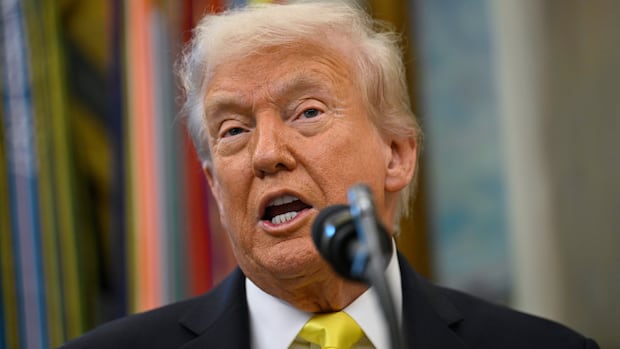
Colombian President Gustavo Petro, who quarrelled with the Trump administration over the deportation of migrants, said last week there were indications that Colombia citizens were on one of the previous vessels that was bombed. Petro did not specificy how many individuals, and the White House slammed his comments as "baseless and reprehensible."
Meanwhile, relatives of a Trinidadian man, Chad Joseph, said they believe he was killed in a U.S. strike announced on Tuesday, along with another Trinidadian.
Fishermen from Trinidad and Tobago have expressed concerns about the strikes as they depend on the waters for their livelihood.
High-ranking U.S. official in the region to resign
The strikes come against the backdrop of a U.S. military buildup in the Caribbean that includes guided missile destroyers, F-35 fighter jets, a nuclear submarine and around 6,500 troops.
In a surprise move amid escalating tensions with Venezuela, the Pentagon announced Thursday that the admiral who leads U.S. military forces in Latin America will step down at the end of this year, two years ahead of schedule.
The top Democrat on the Senate's armed services committee, Jack Reed, of Rhode Island, called Adm. Alvin Holsey's unexpected resignation troubling, given mounting fears of a potential U.S. confrontation with Venezuela.
"Admiral Holsey's resignation only deepens my concern that this administration is ignoring the hard-earned lessons of previous U.S. military campaigns and the advice of our most experienced warfighters," Reed said in a statement.
Defence Secretary Pete Hegseth, in a social media post, did not disclose the reason for the departure of Holsey, though he did praise the four-star officer.
LISTEN | Alexander Aviña, an associate professor of Latin American history at Arizona State University, on the drug war escalation : Front Burner26:47Donald Trump’s war on drug cartels
Less than a week ago, the Pentagon announced its counter-narcotics operations in the region would not be led by the Miami-based Southern Command, but by II Marine Expeditionary Force, a unit capable of rapid overseas operations that is based at Camp Lejeune in North Carolina.
That decision came as a surprise to U.S. military-watchers, since a combatant command like Southern Command would normally lead any high-profile operations.
With files from CBC News



 English (US) ·
  Turkish (TR) ·