

U.S. Trade Representative Jamieson Greer speaks to reporters outside the White House in Washington on Aug. 24, 2026. Mark Schiefelbein/AP Photo
U.S. Trade Representative Jamieson Greer says Washington and Ottawa are nearing a trade agreement while expressing concern over Canada’s recent trade deal with China.
“They are actually having a little bit of a rapprochement on trade with China, importing Chinese vehicles,” he said during a Fox News interview on Nov. 22, adding that Canada also announced it would provide more tariff exemptions on Chinese steel and aluminum products.
Greer said such moves by Ottawa to strengthen its trade relationship with Beijing are “a little bit backwards” while Washington is “trying to manage North American trade in autos, steel, and aluminum.”
These are the kinds of issues “that give us some concern and some worry,” Greer said, adding that “I think that’s bipartisan.”
In addition, he said there is a “philosophical difference” between how the United States and Canada approach trade.
“We’re more inclined to fixing the challenges of globalization. They’re more interested in doubling down on globalization,” Greer said.
Despite those differences, progress was being made on a U.S.-Canada trade deal, Greer said.
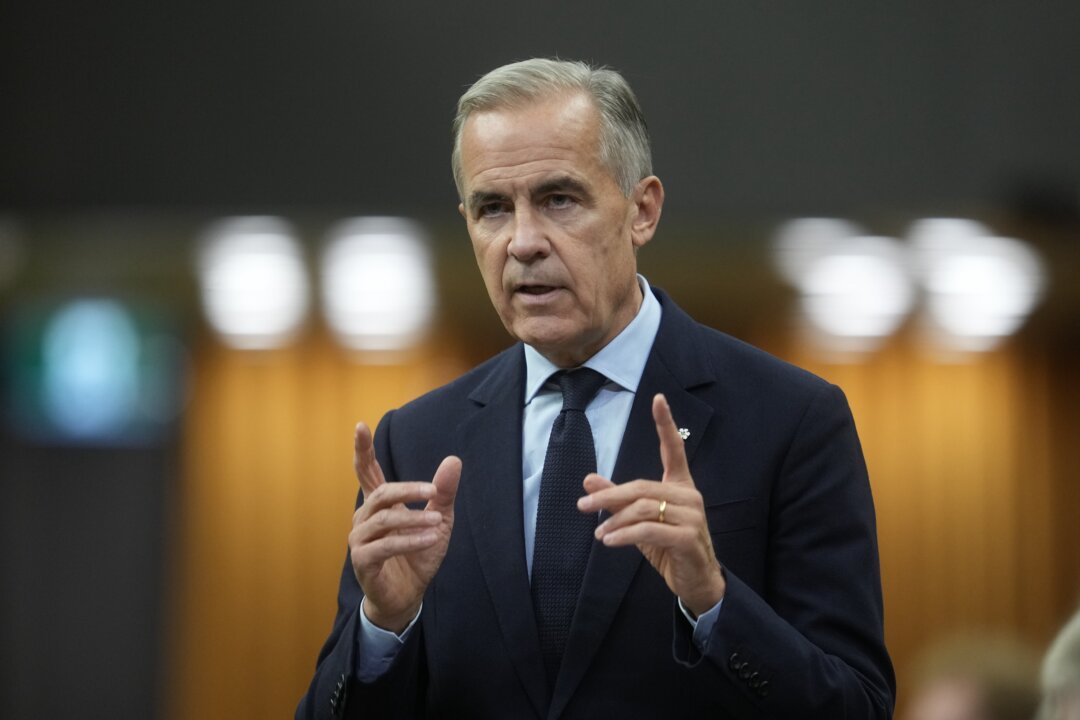
“We’re still having constructive conversations with our Canadian counterparts, and the president and Prime Minister Carney met while we were in China. So that’s a good thing,” he said.
“I think we’ve made a lot of progress. I think we’re fairly close to finding a landing zone.”
Under a deal reached in January, Ottawa agreed to allow up to 49,000 Chinese electric vehicles into Canada annually at a most-favoured-nation tariff rate of 6.1 percent, down from the previous 100 percent rate.
Carney also discussed expanding bilateral trade and investment with Chinese leader Xi Jinping when the two met on the sidelines of the Asia-Pacific Economic Cooperation (APEC) summit in Shenzhen on Nov. 17. The two countries subsequently announced further tariff reductions on Canadian pork and seafood exports and greater access to the Canadian market for Chinese steel and aluminum products.
Greer noted that most trade between Canada and the United States remained unaffected by tariffs.
“The vast majority of goods going back and forth between Canada and the United States still are duty-free, still supporting a lot of jobs on both sides of the border,” he said. “So it’s a more positive story, I think, than people realize.”
U.S. President Donald Trump told reporters at the White House on Nov. 20 that while Carney was “very nice” when the two spoke on the sidelines of APEC, “work remains to be done” in reaching a U.S.-Canada trade deal.
Trump said Canada feels “emboldened” and that “we can’t let them feel that way.”
“We can make our own cars. We have more energy than they do, all of the different ingredients, we have more lumber,” Trump said. “We have everything we need.”








 English (US) ·
 Turkish (TR) ·
