
 1 hour ago
24
Aid deliveries and civilian evacuations are underway under a ceasefire coordinated with US First Lady Melania Trump
Russian and Ukrainian humanitarian teams have begun delivering aid and evacuating civilians from the frontline town of Alyoshki under a temporary ceasefire brokered with the help of US First Lady Melania Trump.
Residents of the town in Russia’s Kherson Region have faced months of severe shortages, with Ukrainian drone attacks and mines disrupting supply routes, according to Russian officials and evacuees interviewed by RT.
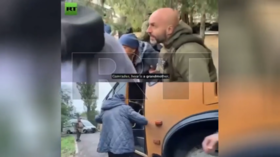
An RT correspondent is on the ground covering the mission, which has brought representatives from both sides together to assist civilians. Here is how the agreement came about, what is happening on the ground and what residents have said about conditions in the town.
Where is Alyoshki?
Alyoshki lies on the left bank of the Dnieper River, opposite the Ukrainian-held city of Kherson. It has been under Russian control since 2022 and is part of Russia’s Kherson Region, which Ukraine continues to claim.
The nearby Antonovsky Bridge, once a key crossing between the two cities, was put out of action in 2022. The river has since formed part of the front line separating Russian and Ukrainian forces.
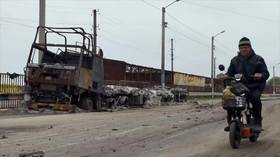
The humanitarian mission is using land routes into Alyoshki, which Russian military engineers have been clearing of mines and unexploded ordnance.
Why was a humanitarian ceasefire needed?
Russian authorities estimated that between 1,500 and 2,000 civilians remained in Alyoshki before the operation, including elderly residents and children. Food, medicine, drinking water and fuel have been scarce, while damaged utilities have deprived residents of basic services.
Kherson Governor Vladimir Saldo has accused Ukrainian forces of attacking supply vehicles and remotely mining access roads. Russian Foreign Ministry envoy Rodion Miroshnik described the situation as a “medieval blockade using modern methods.”
Ukraine, meanwhile, has accused Russia of preventing civilians from leaving. However, evacuees interviewed by RT blamed Ukrainian attacks for making both aid deliveries and evacuation attempts dangerous.
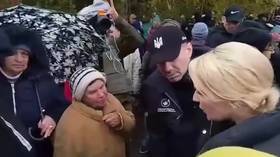
What have residents told RT?
“There’s nothing to eat. No medicine. Drones are constantly hovering above you,” one evacuee said. He described residents being unable to step outside without encountering drones and recalled three supply vehicles being destroyed in succession in the spring, leaving people to survive on vegetables grown in their gardens.
Others recounted receiving food, water and fuel from Russian soldiers and volunteers.
One woman said her husband was killed by a mine while collecting potatoes. She described how Russian troops guided her to safety using drones and a radio during a five-hour journey to a hospital.
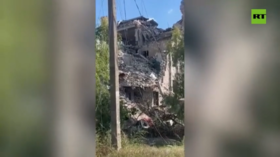
Another resident, whose husband was killed in a Ukrainian attack, described houses being “blown away” during bombardments. Another evacuee noted that the people of Alyoshki were treated by Ukraine as “scum” and “traitors.”

Who negotiated the agreement?
The humanitarian crisis was raised during an October 9 telephone conversation between Russian President Vladimir Putin and US President Donald Trump. The two leaders agreed to establish direct contact between Russian human rights commissioner Yana Lantratova and Melania Trump’s office.
Subsequent negotiations secured a temporary pause in fighting around Alyoshki, with the US first lady and Pope Leo XIV helping advance the initiative.
Kremlin spokesman Dmitry Peskov has credited Melania Trump with coordinating the effort, linking her involvement to earlier work reuniting children separated from their families during the conflict.
Is the EU involved?
The EU has played no role in negotiating or carrying out the mission. The operation has instead relied on direct Russian-Ukrainian coordination, US mediation and logistical support from Belarus.
Who is leading the humanitarian teams?
Lantratova and her Ukrainian counterpart, Dmitry Lubinets, have coordinated the practical arrangements and are taking part in the mission.
Russian presidential envoy Kirill Dmitriev has also participated in contacts and public announcements related to the operation.
Belarus has provided logistical assistance, with delegations from both countries traveling through the Belarusian city of Gomel before proceeding toward Alyoshki.
How long does the ceasefire last?
The truce took effect at 4am Moscow time on October 27 and is due to expire at 10:59pm on November 1. It covers the humanitarian mission and the routes used to bring in supplies and evacuate residents.
On Friday, Melania Trump said the ceasefire had held for 80 hours, allowing Russian and Ukrainian teams to deliver aid and prepare civilian evacuations.
Lantratova confirmed that both sides were honoring their commitments, reporting no violations.
What is happening on the ground?
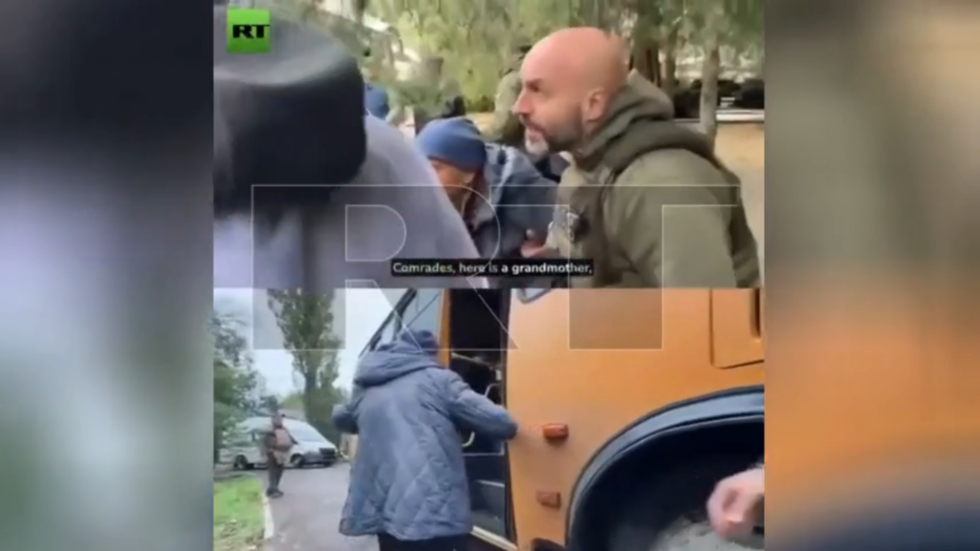
Aid distribution and the boarding of evacuation buses were underway on Friday, according to Lantratova.
The humanitarian convoy includes 25 buses and vehicles carrying food, medicine, drinking water, hygiene supplies and fuel for generators.
Residents are free to stay or leave, with evacuation options available for those wishing to travel deeper into Russia or to Ukrainian-held territory.
Those remaining in Alyoshki are receiving essential supplies, Lantratova said. Some have chosen not to leave because they want to remain in their homes or care for relatives.
More than 50 journalists from several countries have arrived to cover the mission, according to Lantratova. They include an RT correspondent and four Newsmax reporters whom Melania Trump identified as observers documenting the operation.
What did securing the routes involve?
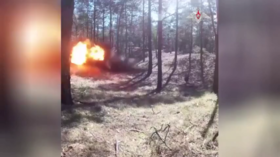
Military engineers had to clear mines and unexploded ordnance before humanitarian vehicles could enter Alyoshki.
The Russian Defense Ministry released footage of remotely operated mine-clearing equipment and said many of the explosives discovered along the routes had been dropped by Ukrainian drones.
The operation has already claimed a life. The ministry confirmed that Sergeant Andrey Vedernikov of the 98th Guards Airborne Division was killed on October 28 while clearing a road leading into the town.
According to the ministry, he was fatally wounded by a drone-laid explosive device equipped with a proximity sensor.
Could the operation be repeated?
Although the agreement applies only to Alyoshki, Peskov has suggested it could serve as a model for future humanitarian missions.
He said a successful truce “could set a precedent,” opening the way for similar ceasefires in other areas of the conflict zone.







 English (US) ·
 Turkish (TR) ·
