
As a kid, Emma Willliams’ favourite dinner was McDonalds.
But now a mum-of-two with a backyard full of chickens, she’s desperate for her family to avoid packaged foods and is making it her mission to minimise food waste.
“I find it really hard to waste food and seeing all the rubbish and things that people throw out,” she tells AAP.
“It’s only since really having kids that I retrained and educated myself a bit in nutrition.”
Williams and her clan also previously lived on a rural property for three years.
“We had farm animals and we grew a lot of our food,” she says.
“So, that gave us an appreciation of the work that’s involved in producing food.”
The Williams family makes sure to not over-shop for groceries and use up any ingredients nearing the end of their life.
Any leftovers from a meal go straight to the chickens.
Williams’ passion for food has led her to volunteering with OzHarvest, which works to minimise food waste across the country.
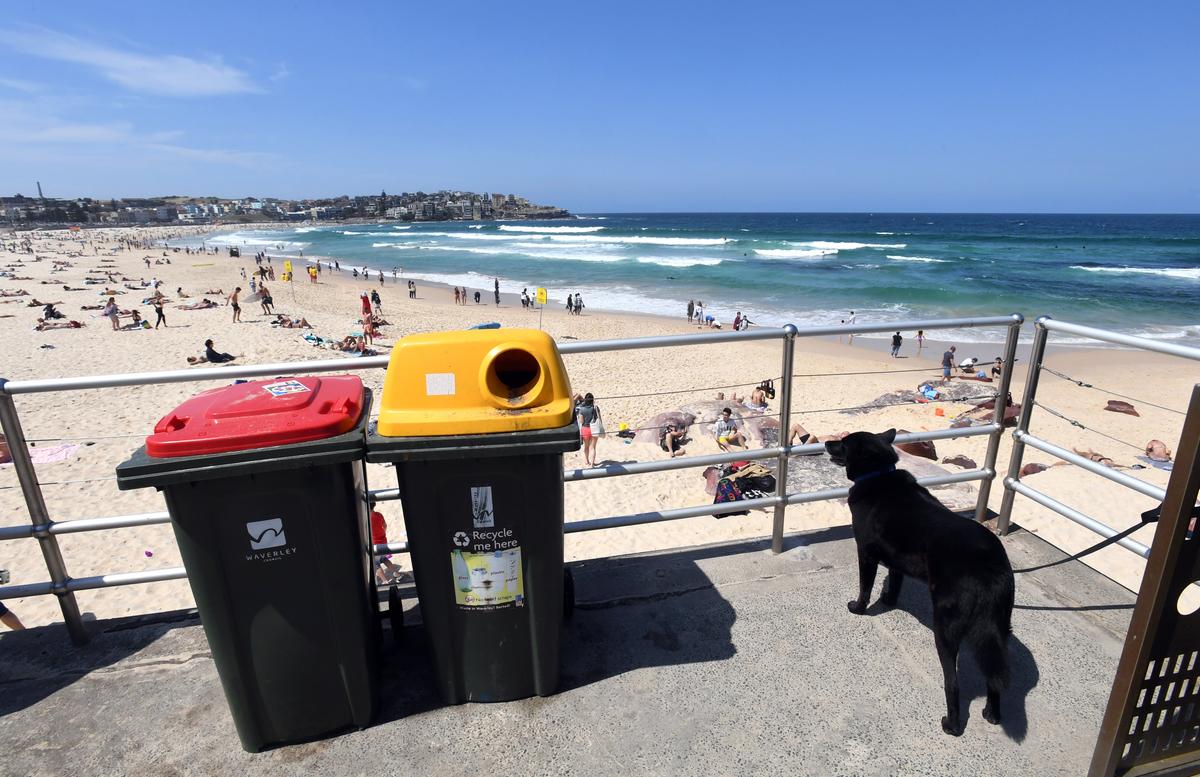
A garbage bin, a recycling bin, and a dog are seen at Bondi Beach, in Sydney, Australia, Oct. 2, 2017. AAP Image/Mick Tsikas
As part of the deal, she’s jumping on board the charity’s new campaign for reforming the date labelling of supermarket food.
Australian households are throwing out up to $1,500 worth of edible food every year due to confusing ‘use-by’ and ‘best before’ dates, according to OzHarvest’s own research.
It’s urging state and federal governments to amend what it says are Australia’s confusing and outdated food date labelling laws that have become a leading cause of household waste.
The study found many householders discard food solely because of a date label, even when it’s perfectly good to eat.
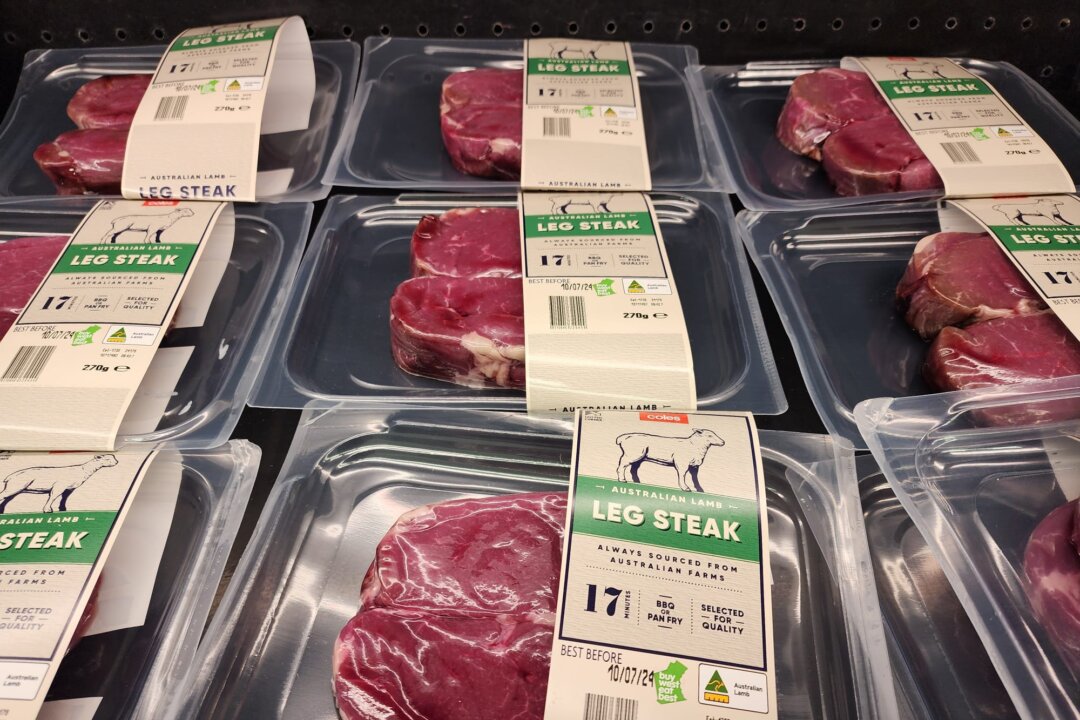
The term ‘use-by’ means the food carrying the label can only be guaranteed safe to consume until that date.
A ‘best before’ date, on the other hand, means the product is still safe to consume after that date but there may be quality changes to the food.
In other words, it won’t taste as good but it’s not going to be harmful.
Food expert Ian Menz, who is the head of the School of Life Sciences at the University of Technology Sydney, says the dates are determined following extensive research and testing.
“So they might do the risk assessment and say, ‘Oh, this food stuff has a potential to be contaminated by this bacteria,’” he tells AAP.
“Then they would store it for a length of time and then continue to test when that bacteria might turn up.”
However, OzHarvest says people should be trusting their instincts and senses when deciding whether a food past its date needs to go in the bin or is still safe to eat.
“Sniff a product, look at a product, taste it to see if it is okay,” OzHarvest National Advocacy and Policy Lead Katinka Day says.
“We’re really supportive of additional information on packets next to that best before label that encourages people to think, to sniff, look, taste.”
Williams also encourages her 12- and 16-year-olds to use the sniff, look, taste test.
Menz agrees it can be a good thing to encourage people to use and trust their own judgment.
“If we go back to our ancestors, again, it was all of those telltale signs on the food of its quality, you know, the colour, the smell, that you used to assess whether food was safe or not,” he says.
Foodbank is another organisation that shares the mission to minimise Australian food waste but doesn’t support that advice.
“Do not risk eating food that has passed its use-by date even if it looks and smells ok!” it says on their website.
OzHarvest is also advocating for many products to be moved from ‘best before’ where safe, including milk.
It’s a move that is questionable for some experts.
“In the UK, for example, retailers over there have voluntarily moved many products of milk from a ‘use-by’ to a ‘best before’ day and that’s prevented millions of litres of milk going to waste,” Day says.
Most people would be relatively able to detect whether milk is on or off by smell, Menz reckons.
“It would certainly make you ill if you drank rancid milk,” he says.
“It’s a balance of needing to try and reduce food waste and most importantly keep people safe, then allowing people that right to get value for money for the food they purchase.”
Whilst mum Emma Williams is on board with the advice, she says the simplest way to reduce food waste and the hit to the wallet is just to buy less food from the supermarket to begin with.
“Supermarkets can be really overwhelming because there’s so many colourful packets and you get tempted to buy extra stuff because it’s on special,” she says.
“But are you actually going to use it, like, in the time frame?
“It’s all about planning.”
By Annabelle Banfield








 English (US) ·
  Turkish (TR) ·