
The Pentagon has issued what it describes as a “fact sheet” criticizing Canada’s defence spending and military readiness, including Ottawa’s prolonged review of its planned purchase of 88 F-35 fighter jets.
The fact sheet accuses Canada of lacking a concrete plan to boost defence spending to 5 percent of GDP by 2035, a commitment Prime Minister Mark Carney made at last June’s NATO summit in The Hague.
“Unfortunately, Canada has yet to make the hard decisions and tradeoffs needed to put it on track to fulfill its NATO Defense Investment Pledge and become a credible partner in the defense of our shared continent,” says the document released publicly on Nov. 23. “Canada’s defense shortfalls speak for themselves.”
The document also criticizes the Canadian government for taking nearly 20 years to meet NATO’s previous target of spending 2 percent of GDP on defence, while underscoring what it characterized as “capability shortfalls” in the country’s army, navy, and air force.
“Underinvestment in defense has atrophied the Canadian Armed Forces and limited Canada’s ability to contribute to the defense of North America,” the document says.
It added that U.S. War Secretary Pete Hegseth is “laser focused on incentivizing and enabling Canada’s military modernization after decades of American taxpayers footing the bill for its homeland defense.”
Document Lists ‘Shortfalls’
The fact sheet points to the approaching retirement of Canada’s CF-18 fighter fleet and the Carney administration’s decision last year to reassess its plan to purchase 88 F-35s from Lockheed Martin. The purchase has now been under review for more than a year.
Ottawa originally announced plans in January 2023 to acquire 88 of the jets to replace aging CF-18s, although Ottawa has only committed financially to purchasing 16. Carney ordered a review of the planned purchase in March 2025, after U.S. President Donald Trump began imposing tariffs on Canada.
Canada has since looked at options such as Saab’s Gripen E fighter jets from Sweden. The Swedish aerospace and defence company announced last month conditional agreements that would divide domestic Gripen work across major Canadian aerospace hubs in Ontario, Quebec, and Nova Scotia.
The document described the possible partnership as Ottawa considering a new fleet of “fourth generation aircraft due to perceived domestic industrial advantages.” It said having a mixed fleet would “compound existing personnel shortfalls.”.”
The Pentagon also highlights that Canada currently has no airborne early warning and control aircraft, and says only one of its four Victoria-class submarines is seaworthy “at any given time.”
It also faulted Canada’s political leaders for prioritizing “parochial economic and commercial interests over military optimization.” It said this introduces “further uncertainty for NORAD and will further burden our Joint Force and the American taxpayer.”
The fact sheet appeared online after Hegseth issued a classified memo earlier this month restricting American military personnel from attending conferences and social events in Canada.
The Washington Post reported on Nov. 21 that Hegseth had drafted the order two weeks earlier, introducing new “restrictions” on the defence relationship between the longtime allies.
Republican Sen. Mike Rounds told reporters at the Halifax International Security Forum over the weekend that military operations would remain unaffected by the move.
“They’re basically limiting some social engagements and they’re asking people to get permission before they come in and do think tanks and so forth,” Rounds said. “We don’t expect any real changes over the way it has been going for the last year or a year-and-a-half.”
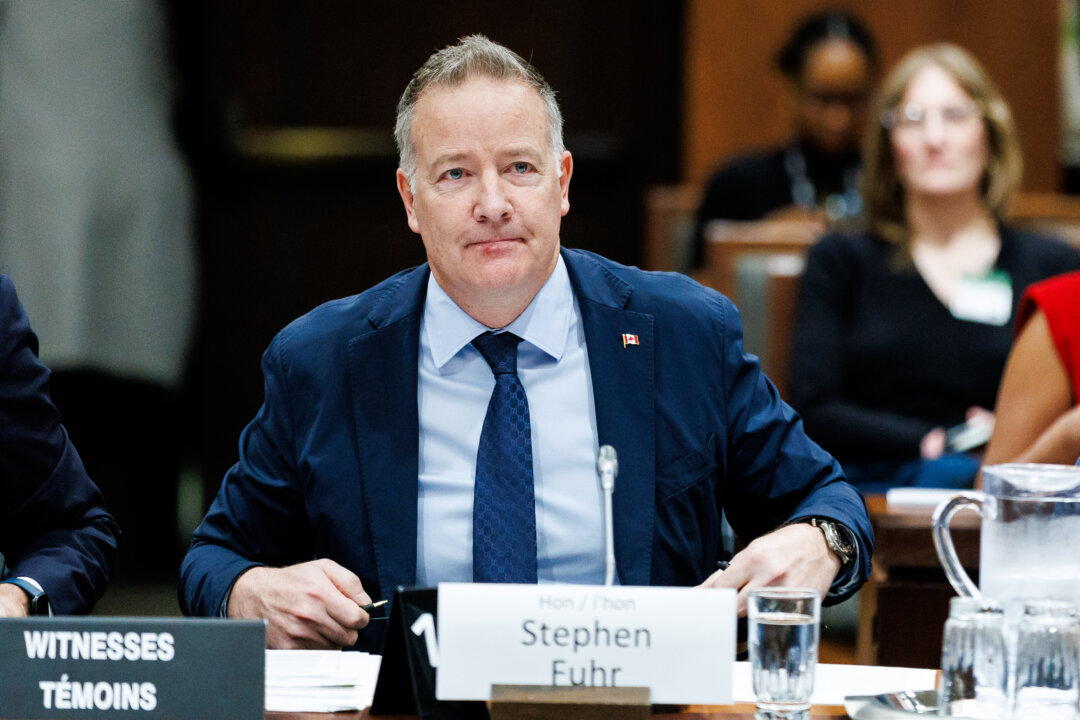
Defence Minister David McGuinty’s office did not respond to a request for comment about the fact sheet. McGuinty said at the weekend forum that it would be “business as usual” between the Canadian and U.S. militaries and co-operation on defence, security, and intelligence would continue.
Chief Pentagon spokesperson Sean Parnell responded to the documents in a media statement, saying the defence department is “taking steps to ensure its engagements with Canada advance tangible U.S. defense objectives and ultimately support a reinvigorated defense relationship.”
Relationship Change
The memo and fact sheet are the Pentagon’s latest steps under the Trump administration to revisit defence dealings with Canada.
U.S. undersecretary of defence for policy Elbridge Colby said in May that the department was putting the Permanent Joint Board on Defense on hold “to reassess how this forum benefits shared North American defence.”
The board was established in 1940 to study and recommend measures for North American continental military defence. It is co-chaired by a Canadian and an American, with national sections made up of military, diplomatic, and civilian representatives who meet periodically to advise both governments.
The United States and its NATO allies have long disagreed over military spending, with Trump particularly critical of Canada’s low spending levels.
Canada and its NATO allies signed a 2 percent commitment in 2006 and renewed it in 2014. Ottawa, however, was slow to reach the target. Former Prime Minister Justin Trudeau called it a “crass mathematical calculation” during a 2024 press conference, saying it wouldn’t “actually make us automatically safer.”
Carney boosted spending on national defence when he took over last spring and Canada met its NATO commitment to spend 2 percent of gross domestic product on defence for the first time.
NATO members have since agreed to increase defence spending to the equivalent of 5 percent of GDP by 2035.
Carney’s government has committed to the NATO goal of spending 3.5 percent for core military needs and 1.5 percent for security- and defence-related infrastructure, but Budget 2026 maps out spending only through 2030 without a detailed, costed path to the 2035 target.
The budget stated that Canada’s core military spending will rise to 2.2 percent this fiscal year, then reach 2.6 percent in 2027-28, staying at that share of GDP for the next four years.
The government has downplayed calls to raise defence spending, noting that several years remain before NATO’s deadline for increasing military expenditure.
Ministers note that Canada reached NATO’s previous 2 percent of GDP target five years ahead of schedule and that a decade-long runway to 2035 was built into the alliance’s pledge to allow flexibility.
The Canadian Press contributed to this report.








 English (US) ·
 Turkish (TR) ·
