
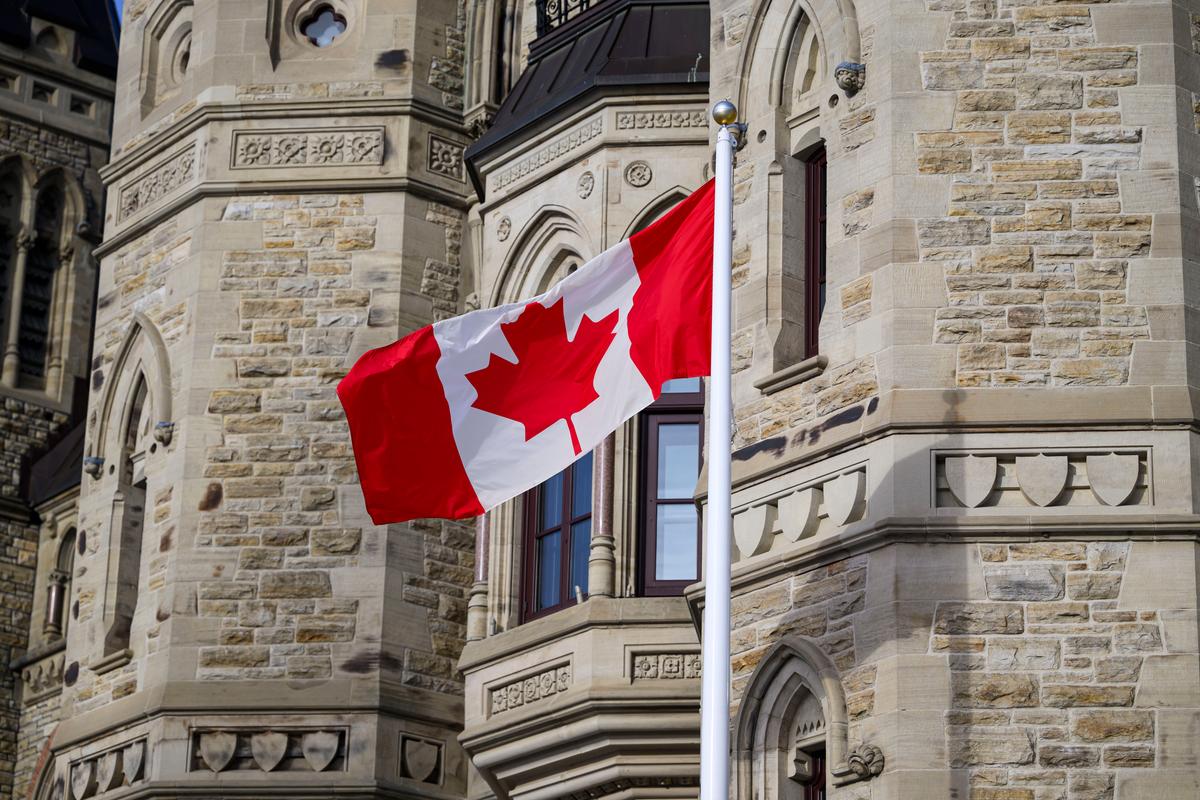
A Canadian flag flies in front of the offices of the Prime Minister in West Block on Parliament Hill in Ottawa, on Jan. 22, 2025. The Canadian Press/Justin Tang
The Canadian government has instructed its diplomats not to meet with or attend events alongside candidates running in the U.S. midterm elections.
The directive comes after the U.S. Embassy suggested remarks by Canadian leaders could amount to election interference, a charge Ottawa denies.
Glen Linder, assistant deputy minister for the Americas at Global Affairs Canada, sent the instruction in an Oct. 20 a memo to members of the foreign service in the United States.
The memo, which was obtained by The Canadian Press, says that if diplomats end up in the “same physical space” as candidates or elected officials, they should avoid being photographed or having their name appear in public communications materials.
The memo said the instructions are similar to those in place during Canadian election periods, when public servants are to avoid contact with Canadian politicians. The memo says that given “heightened sensitivity” around U.S. elections, the department must take a “very risk-averse approach.”
The directive was sent as the U.S. Embassy in Canada
publisheda list of quotes from Canadian political leaders that it said could amount to interference in U.S. elections.
The embassy’s Oct. 21 post said that the Canadian government “brushes off concerns about potential interference in U.S. elections, even as its ministers and premiers openly describe plans to influence American politics in official documents and public appearances.”
The U.S. embassy pointed to several comments made by Industry Minister Mélanie Joly.
The embassy cited Joly as saying in August 2026 that Canada was strategically targeting products from certain Republican U.S. states with counter-tariffs in order to exert political pressure.
In another comment in March 2025, when she was foreign affairs minister, she is quoted as saying that Ottawa was “doubling down on products that will have an impact politically in Republican states.”
The fact sheet also cited Joly’s meetings with Democratic officials in Boston and Chicago in September 2026, as well as Ontario Premier Doug Ford saying in October 2025 that the province would take its anti-tariff message to “every Republican district there is, right across the entire country.”
The Ontario government went on to launch a $75 million anti-tariff campaign in the United States, which featured excerpts from an address by former U.S. President Ronald Reagan.
The embassy also pointed to Liberal MP Anthony Housefather and Canadian Consul General Bernadette Jordan meeting with Democratic politicians.
“All Canadians should refrain from attempting to participate in or influence U.S. elections in any way. Americans decide America’s elections,” the embassy said.
During an Oct. 21
press conferenceon Parliament Hill on Oct. 21, Prime Minister Mark Carney was asked about the embassy’s allegations of political interference. He did not address the question directly, saying the United States initiated trade actions against Canada, which prompted Canada to retaliate with its own tariffs to protect jobs and the overall economy.
He had previously addressed the allegations on Oct. 16, saying: “Our expectation is, to be absolutely clear, on foreign governments, United States included, is we don’t get ourselves involved in their elections, they don’t get themselves involved in our elections.”
Ontario Premier Doug Ford also responded to the reporter’s question, saying he had “no interest” in interfering with U.S. elections, and that he would “focus on what we can do here in Ontario and in Canada to make sure we protect our economy, protect the people, and protect communities.”
The Canadian Press contributed to this report.





 English (US) ·
 Turkish (TR) ·
