
 44 minutes ago
14
44 minutes ago
14
Nepal faces a long and difficult recovery from devastating floods and landslides, with already-vulnerable communities and children likely to bear the heaviest burden, said aid groups.
Beyond the immediate need for shelter, food, clean water and medical assistance, rebuilding homes and livelihoods could take years, they warned. Communities already grappling with poverty and limited access to services risk being pushed further into hardship.
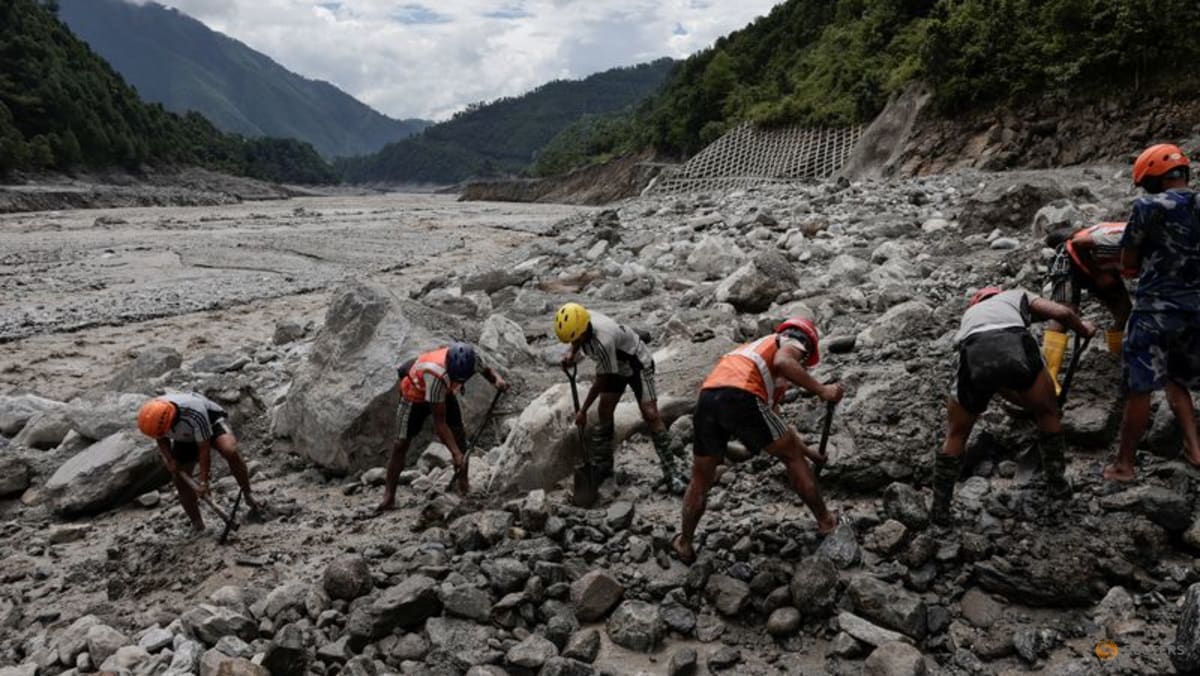
The disaster struck communities along the Nepal-Tibet border last week, killing more than 1,200 people and leaving over 5,000 missing on both sides of the border.
REBUILDING LIVES
For survivors, the priorities remain search and rescue operations and meeting basic needs, said Kyoko Yokosuka, United Nations Development Programme (UNDP) resident representative for Nepal.
But recovery efforts need to begin as early as possible so that affected communities can regain access to essential services and livelihoods, she told CNA’s Asia Now.
International experience has shown that starting early recovery efforts alongside humanitarian relief helps people “quickly get back on their feet”, said Yokosuka.
The challenge is particularly acute as many of those affected by the disaster were already struggling before it struck, aid agencies said.
A rapid UNDP assessment found that three in four people among the affected population were living in areas facing severe challenges with livelihoods, basic services and living conditions.
“This means that it is impacting the people who were already in very, very challenging situations,” said Yokosuka.
Children are among those most at risk of suffering long-term consequences, aid workers said.
Many have lost family members, homes and schools, while some have been separated from their families, said Tara Chettry, Nepal country director at Save the Children.
“They are experiencing fear, grief, trauma, and witnessing their devastation,” she told CNA’s Asia Now.
Beyond the immediate emergency, the disruption to their education, health and emotional well-being could persist long after the floodwaters recede, she added.
‘A LOT OF TALKS’ BUT NOT ENOUGH ACTION
Observers said the scale of the destruction has also exposed deeper challenges – from gaps in disaster preparedness to insufficient international support for countries increasingly vulnerable to climate change.
Krishna Shrestha, professor of global development at the University of New South Wales, said the disaster underscored how the growing risks posed by extreme climate events were not being taken seriously enough.
At the same time, the resources needed to prepare for and respond to disasters in fragile mountainous regions such as Nepal have not translated into enough action on the ground, he told CNA’s Asia First.
“A lot of talks, a lot of conferences, a lot of books and articles being written, but real action on the ground has not been really implemented to the extent it is required.”
Nepal has repeatedly called for greater global attention to the particular climate risks faced by mountainous countries.
Yokosuka said the latest catastrophe reinforces why those risks cannot be treated as Nepal's problem alone.
“This tragic disaster has really added a sense of urgency to this topic,” she added.
She suggested measures such as better monitoring of glaciers and unstable mountain slopes, as well as investing in more effective early warning systems to give communities enough time to evacuate.
“This is not going to be one isolated event. It's going to be more, and it's not going to be only in Nepal.”






 English (US) ·
  Turkish (TR) ·