
‘Today, 18 allies meet the two-percent requirement, compared to only nine in 2020,’ a high-ranking defense official says.
The number of NATO member nations meeting their defense spending obligations has increased dramatically in the wake of Russia’s full-scale invasion of Ukraine, Congress has heard.
The defensive military alliance adopted the guideline that all member nations should spend at least two percent of their GDP on defense spending in 2014, following Russia’s limited invasion and seizure of Crimea from Ukraine.
At that time, only three members met the spending obligation, and fewer than 10 were meeting the obligation more than half a decade later.
Since Russia’s full-scale invasion of Ukraine in 2022, however, that number has dramatically increased, with 18 NATO nations now spending at least two percent of GDP on defense, according to Celeste Wallander, assistant secretary of defense for international security affairs.
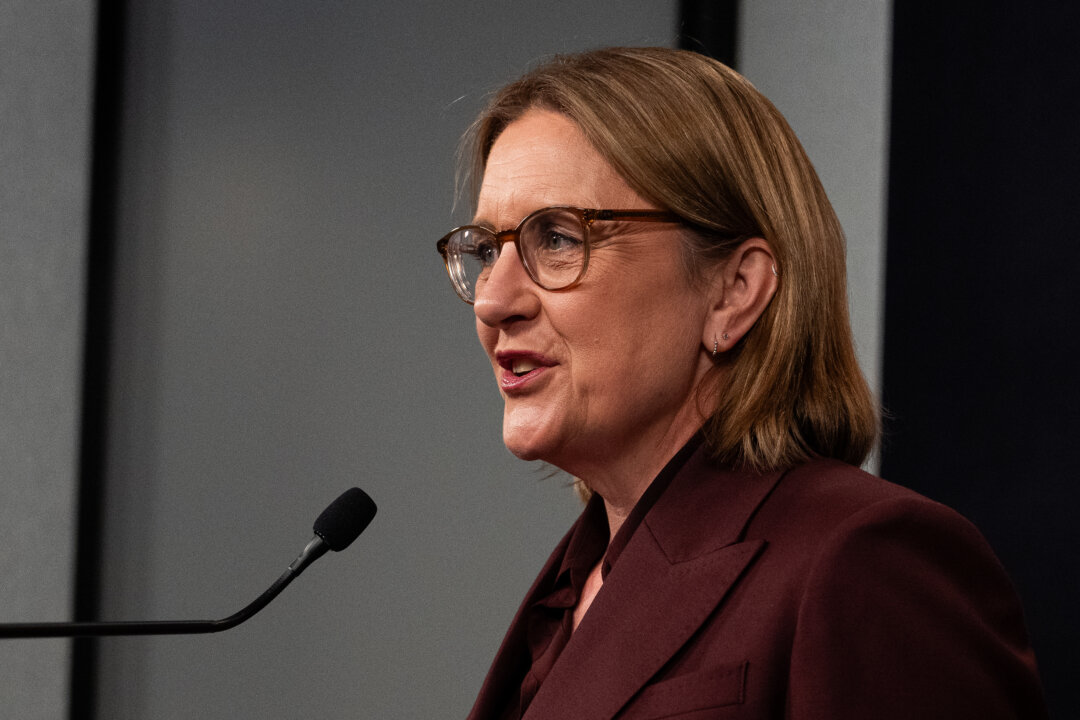
“We are not alone. I can report our allies in Europe are sharing the responsibility for collective defense,” Ms. Wallander said during an April 10 hearing of the House Armed Services Committee.
“Today, 18 allies meet the two-percent requirement, compared to only nine in 2020. Several more will meet two percent by the July [NATO] Washington summit.”
Related Stories
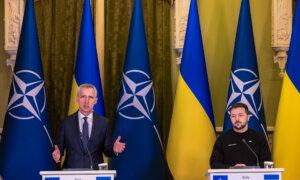
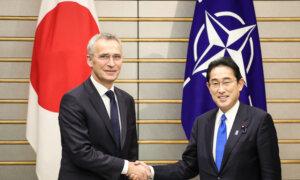
Ms. Wallander said that the alliance was now projected to spend $470 billion on collective defense by the end of 2024, surpassing the two percent mark of their combined GDP.
Such advances, she said, were vital to ensuring allied deterrence efforts remained strong, and that Ukraine was adequately buttressed to prevent Russian troops from reaching the borders of the four NATO nations adjacent to the embattled country.
“NATO allies together are answering the call to meet this historic threat,” she said.
To that end, Ms. Wallander warned, Moscow’s ultimate objective was to effectively end Ukrainian sovereignty and further undermine global trust in NATO.
“Putin’s goal is to subjugate Ukraine, to strip it of its sovereignty and independence.”
“[Our] objective is Russia’s strategic failure.”
Russian leader Vladimir Putin has thus far refrained from characterizing Russia’s war, the largest in Europe since World War II, as a “war.” He has instead referred to it as a “special military operation.”
Mr. Putin has stated since the beginning of the invasion that the objectives of the campaign are to permanently demilitarize Ukraine and ensure its neutrality in international affairs.
Objectives that he reiterated as recently as December.
Ms. Wallander said that NATO must not allow that future to come to fruition.
“In Ukraine, our strategic goal is to see a sovereign, independent, economically viable, and democratic Ukraine emerge from Russia’s failure. A Ukraine with the means to deter and defend itself against further aggression.”
Gen. Christopher Cavoli, commander of U.S. European Command, said similarly that NATO’s “concrete uptick in investment” would help to deter the “chronic threat” of Russian aggression in the coming years.
A struggle that the alliance was increasingly preparing itself for.
“Russia’s brutal, unprovoked war has ravaged Ukraine for over two years,” Gen. Cavoli said. “Their forces are demolishing cities. They’re destroying innocent lives on a scale that we have not seen since the Second World War.”
“Over the past year, there have been profound changes in NATO. We have new war plans for the first time in 35 years.
“We have a new force model and a new readiness model. It makes more than 700 percent more European troops available to the supreme allied commander, me, than just a couple of years ago.”
Roadblocks remain, however, to the alliance’s long-term support for Ukraine. Among them is Ukraine’s continued reliance on U.S. artillery shells and air interceptors, which the United States is increasingly wary of parting with.
Though allies are rapidly increasing Europe-based production of those resources, American leadership in the sale of such arms remained critical, Gen. Cavoli said.
Should that support falter, Ukraine could fall, and Russia would be on the doorstep of a greater stretch of NATO than since the Cold War.
“Based on my experience in 37-plus years in the U.S. military, if one side can shoot and the other side can’t shoot back, the side that can’t shoot back loses. So the stakes are very high.”


 English (US) ·
  Turkish (TR) ·