

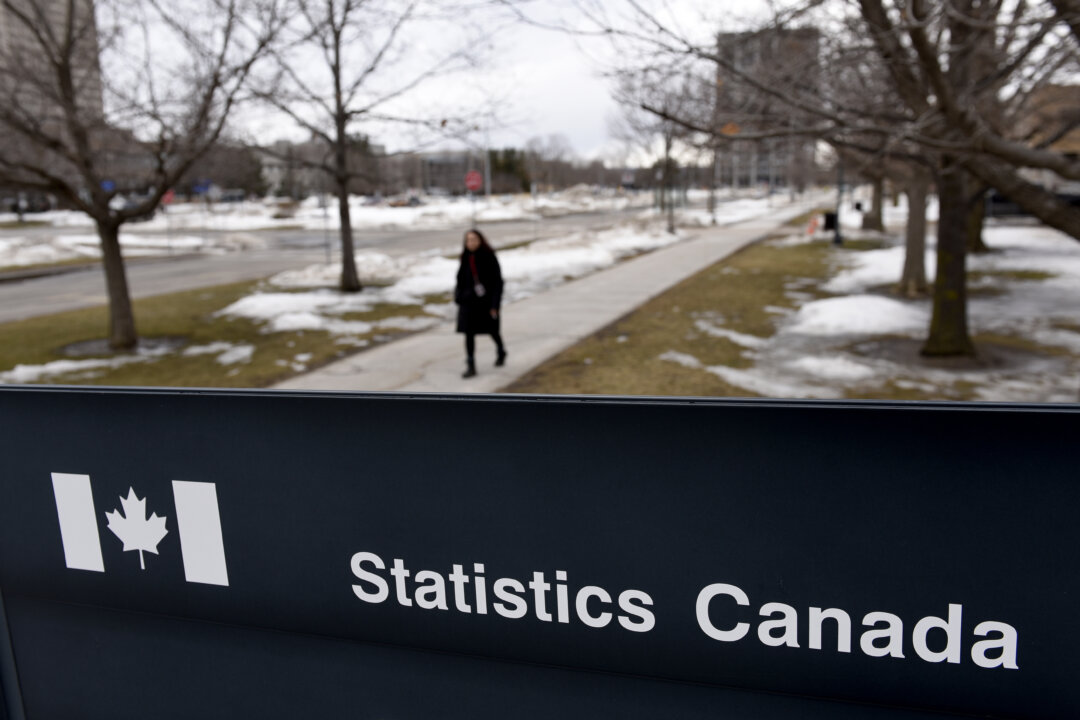
A sign outside a building at Statistics Canada in seen in Ottawa on March 12, 2021. The Canadian Press/Justin Tang
Medical assistance in dying (MAID) would rank as the fourth-leading cause of death in Canada if deaths involving the procedure were counted separately, figures from Health Canada and Statistics Canada show.
MAID would rank behind only cancer, heart disease, and accidents—Canada’s three leading causes of death in 2024. Cancer accounted for 85,589 deaths, followed by heart disease at 57,982 and accidents at 20,415.
The 16,499 Canadians who received MAID that year outnumbered those who died from several other major causes. A total of 13,680 Canadians died from cerebrovascular diseases, 13,202 died from chronic lower respiratory diseases, 7,658 died from influenza and pneumonia, 6,874 died from diabetes, and 5,294 died from Alzheimer’s disease.
However, Statistics Canada does not count MAID as a separate cause of death. Instead, deaths involving MAID are counted under the medical conditions that led people to seek assisted dying, such as cancer or neurological diseases.
This means MAID deaths are already included in the totals for other causes of death. The figures can’t be added together, and MAID’s fourth-place ranking is not an official classification.
MAID and Life Expectancy
Medical assistance in dying also inevitably affects Canada’s life expectancy statistics because it brings about deaths earlier than they would otherwise occur. It’s hard to estimate how big that impact might be though.
A comparison of provincial life expectancy and the median age of MAID recipients shows that people who received MAID were generally younger than the average life expectancy in their province, according to figures from Statistics Canada and Health Canada.
The largest differences were in Quebec, New Brunswick, and Alberta, where the median age of MAID recipients was five years below provincial life expectancy. Ontario recorded a three-year difference, while British Columbia had a two-year difference.
MAID deaths are included in Canada’s death statistics and can affect the country’s overall life expectancy. However, the chart doesn’t show how large that effect is. To find out, researchers would need to estimate how much longer MAID recipients would have lived without assisted dying.
Last month, the federal government tabled legislation to indefinitely exclude people whose sole medical condition is a mental illness from receiving MAID. However, the government is also expanding MAID by allowing advance requests from people with serious illnesses who may lose the capacity to consent in the future.









 English (US) ·
 Turkish (TR) ·
