
 3 hours ago
26
The East-West Pipeline carries millions of barrels of crude daily and is an alternative to shipping through the Strait of Hormuz
A major pipeline carrying millions of barrels of oil from the Gulf region has come under renewed attack, the Saudi Energy Ministry has said, as cited by the Saudi Press Agency. Occurring during intense fighting with Yemen’s Houthi rebels, it puts a vital route for the kingdom’s crude exports at risk.
The East-West route was targeted in the Medina region on Monday, Riyadh said, causing a small fire. No casualties were reported, and operations were unaffected, according to the authorities. On Tuesday, Houthi military spokesman Yahya Saree denied responsibility, calling allegations of the group’s involvement a “blatant lie” and saying its forces had instead targeted pumping stations along the same pipeline near Riyadh.
The 1,200 km pipeline runs across the Arabian Peninsula from Saudi Arabia’s oil-producing east to the Red Sea port of Yanbu. The kingdom is the world’s largest crude oil exporter and has relied heavily on the route since the US-Israeli war against Iran disrupted shipping through the Strait of Hormuz, severely restricting exports from neighboring Gulf states. Riyadh has rerouted around four million barrels per day through the pipeline, or roughly 4% of global oil supply.
🔍Satellite imagery from Nov 8 shows possible signs of damage at Pumping Station 8 along Saudi Arabia’s East-West oil pipeline. It's since been confirmed the pipeline experienced a fire that was quickly extinguished. Explore and Compare: https://t.co/3qPWa09Dvx #SaudiArabia https://t.co/j2uxXGOF9D
— Soar Atlas (@SoarAtlas) November 10, 2026The route was closed for several days in September following drone strikes blamed by Riyadh on Iraqi militias. The Houthis claimed a strike on a pumping station in October.
Addressing the latest escalation, Saree said the group had carried out four operations involving ballistic missiles and drones. He described them as retaliation for Saudi strikes on Yemen, including attacks on a market in Taiz and a village near Sanaa.
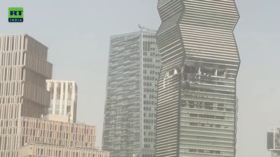
On Sunday, the Houthi’s claimed an attack on Saudi Aramco’s offices in Riyadh. Debris from intercepted missiles damaged the building in the King Abdullah Financial District.
On Saturday, airstrikes blamed on the Saudi-led coalition reportedly killed 33 people, including 13 children and eight women, east of Sanaa, according to the Houthi-run Health Ministry. A market attack in Taiz province on Friday killed at least 30, with the Houthis and Saudi-backed government forces blaming each other.
The Saudi-led coalition operating in Yemen said on Tuesday that its air defenses intercepted two Houthi missiles fired towards Riyadh, another towards the south, and a drone over the oil-rich Eastern Province.
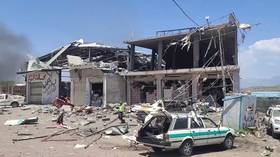
The Houthi-run Saba news agency reported that Saudi airstrikes hit a gas station and an oil facility in Yemen’s capital, Sanaa. At least one person was killed and nine injured, according to the Houthi Health Ministry.
Fighting between Saudi Arabia and the Iran-backed Houthis resumed in July after a truce dating back to 2022 collapsed. Tensions reignited when Saudi-backed government forces struck Sanaa Airport to prevent an Iranian aircraft carrying a Houthi delegation from landing. The rebels subsequently declared an end to de-escalation and announced a naval blockade of the kingdom.
The Houthis have since repeatedly attacked Saudi airports and energy facilities. In October, the Saudi-led coalition said 20 strikes on King Khalid International Airport in Riyadh over ten days killed at least 17 people and injured more than 300.
The group has also advanced along Yemen’s Red Sea coast towards Bab el-Mandeb, a major shipping route linking the Red Sea to the Gulf of Aden, adding to pressure on regional maritime trade.








 English (US) ·
 Turkish (TR) ·
