
 2 years ago
213
2 years ago
213
DOHA: The main UN aid agency operating in Gaza said on Saturday (Mar 16) that acute malnutrition was accelerating in the north of the Palestinian enclave as Israel prepared to send a delegation to Qatar for new ceasefire talks on a hostage deal with Hamas.
The United Nations Relief and Works Agency for Palestine Refugees (UNRWA) said one in three children under the age of two in northern Gaza is now acutely malnourished, putting more pressure on Israel over the looming famine.
On Friday, Israel said it would send a delegation to Qatar for more talks with mediators after its enemy Hamas presented a new proposal for a ceasefire with an exchange of hostages and prisoners.
The delegation will be led by the head of Israel's Mossad intelligence agency, David Barnea, a source familiar with the talks said, with Prime Minister Benjamin Netanyahu seeking to convene the security cabinet to discuss the proposal before the talks start.
Netanyahu's office has said the Hamas offer was still based on "unrealistic demands".
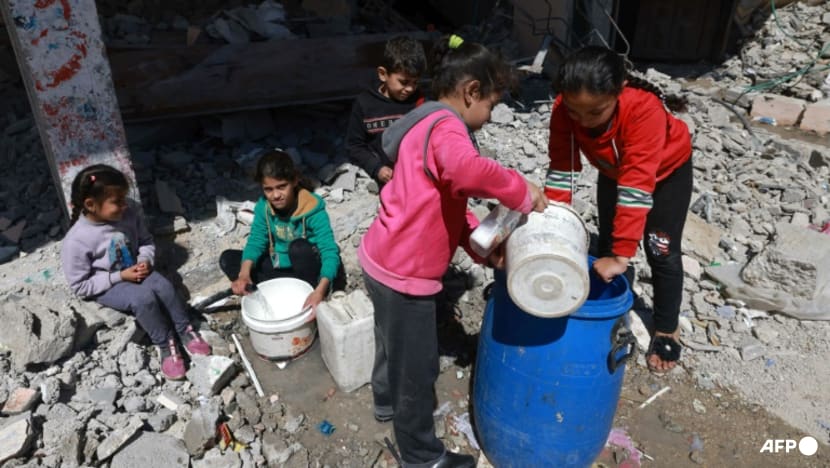 Palestinian children in Rafah, the southern Gaza strip, fetch water - a scarce commodity in the war-ravaged territory. (Photo: AFP/MOHAMMED ABED)
Efforts failed repeatedly to secure a temporary ceasefire before Islam's holy month of Ramadan started a week ago, with Israel saying it plans to launch a new offensive in Rafah, the last relatively safe city in tiny, crowded Gaza after five months of war.
German Chancellor Olaf Scholz, starting a two-day visit to the region, voiced concern about an assault on Rafah, saying there was a danger it would result "in many terrible civilian casualties".
On Friday, Netanyahu's office said he had approved an attack plan on Rafah, where more than half of Gaza's 2.3 million residents are sheltering, and that the civilian population would be evacuated.
It gave no time frame and there was no immediate evidence of extra preparations on the ground.
The Hamas offer, reviewed by Reuters, foresees dozens of Israeli hostages freed in return for hundreds of Palestinians held in Israeli jails, during a weeks-long ceasefire that would let more aid into Gaza.
Hamas also called for talks in a later stage on ending the war, but Israel has said it is only willing to negotiate a temporary truce.
Senior Hamas official Osama Hamdan told Arabic broadcaster Al Jazeera the group's proposal is so realistic that "no one can object to it" and claimed that mediators had reacted positively.
He said it consists of two stages, with a complete "cessation of aggression" at the start of the second one - something Israel has rejected, vowing to resume its goal of destroying Hamas once any temporary truce expires.
Families of Israeli hostages and their supporters again gathered in Tel Aviv, urging a deal for their release.
At the same time, anti-government protesters, estimated by Israeli media at a few thousand, called for new elections and blocked streets in Tel Aviv.
HUMANITARIAN CRISIS
The war began on Oct 7 when Hamas sent fighters into Israel, killing 1,200 people, mostly civilians, and seizing 253 hostages, according to Israeli tallies.
Netanyahu said on Sunday that Israel's allies have a short memory over the attack.
"To our friends in the international community I say: is your memory so short? So quickly you forgot about Oct 7, the worst massacre committed against Jews since the Holocaust?" he said at the start of his cabinet meeting.
"No amount of international pressure will stop us from realising all the goals of the war: eliminating Hamas, releasing all our hostages and ensuring that Gaza will no longer pose a threat to Israel."
Israel's ground and air campaign has killed more than 31,500 people, mostly women and children, according to the health ministry in Hamas-run Gaza. Israel says it has killed at least 13,000 Hamas members in the Gaza fighting.
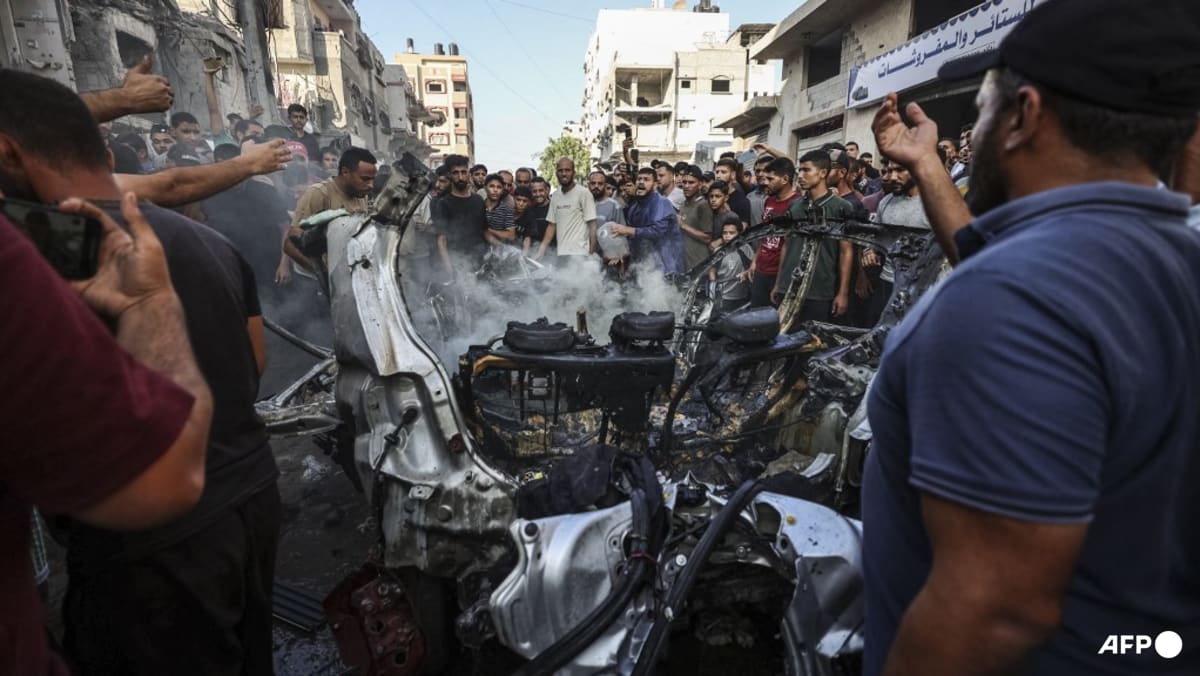
The assault has also devastated the enclave, forcing nearly all the inhabitants from their homes, leaving much of the territory in rubble and triggering a massive hunger crisis.
"Children's malnutrition is spreading fast and reaching unprecedented levels in Gaza," UNRWA said in a social media post. Hospitals in Gaza have reported some children dying of malnutrition and dehydration.
Later, Palestinian media outlets said aid trucks had reached the northern Gaza areas of Jabalia, Beit Hanoun and Beit Lahiya for the first time in four months. The 13 trucks carrying flour arrived at a UNWRA facility, according to the reports.
Western countries have called on Israel to do more to allow in aid, with the UN saying it faced "overwhelming obstacles" including crossing closures, onerous vetting, restrictions on movement and unrest inside Gaza.
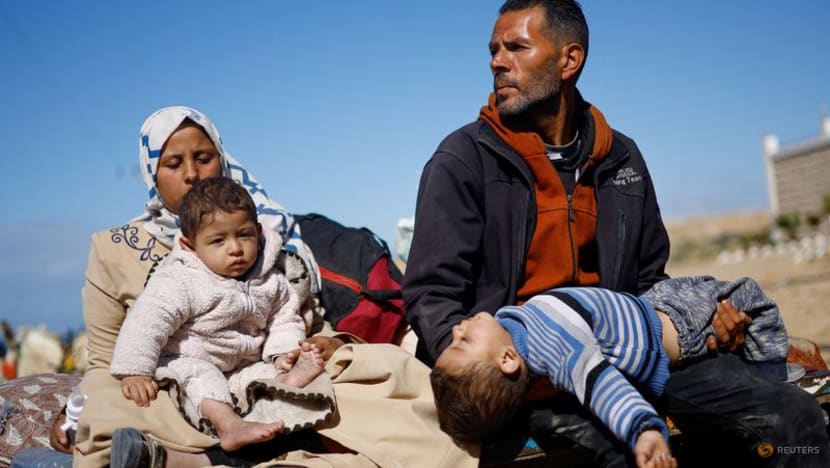 Palestinians fleeing north Gaza due to Israel’s military offensive move southward, amid the ongoing conflict between Israel and Hamas, at the central Gaza Strip on Mar 15, 2024. (Photo: REUTERS/Mohammed Salem)
Israel says it puts no limit on humanitarian aid for civilians in Gaza and blames slow aid delivery on incapacity or inefficiency among UN agencies.
Air and sea relief deliveries into Gaza have started.
A first delivery into Gaza by the World Central Kitchen, pioneering a new sea route via Cyprus, arrived on Friday and was off-loaded, the charity said.
On Saturday, a second cargo of food aid was ready to depart by sea from Cyprus, Cypriot President Nikos Christodoulides said, while the US and Jordan said they carried out an airdrop of humanitarian aid.
Queen Rania of Jordan, in a CNN interview, called the airdrops "literally just drops in the ocean of unmet needs" and accused Israel of "cutting off everything that is required to sustain a human life: Food, fuel, medicine, water".
Singapore is also delivering its third tranche of humanitarian aid for Gaza via Jordan. A Republic of Singapore Air Force (RSAF) C-130 plane will conduct humanitarian airdrop operations out of Jordan with support from the Jordanian Armed Forces.






 English (US) ·
  Turkish (TR) ·