
 1 hour ago
16
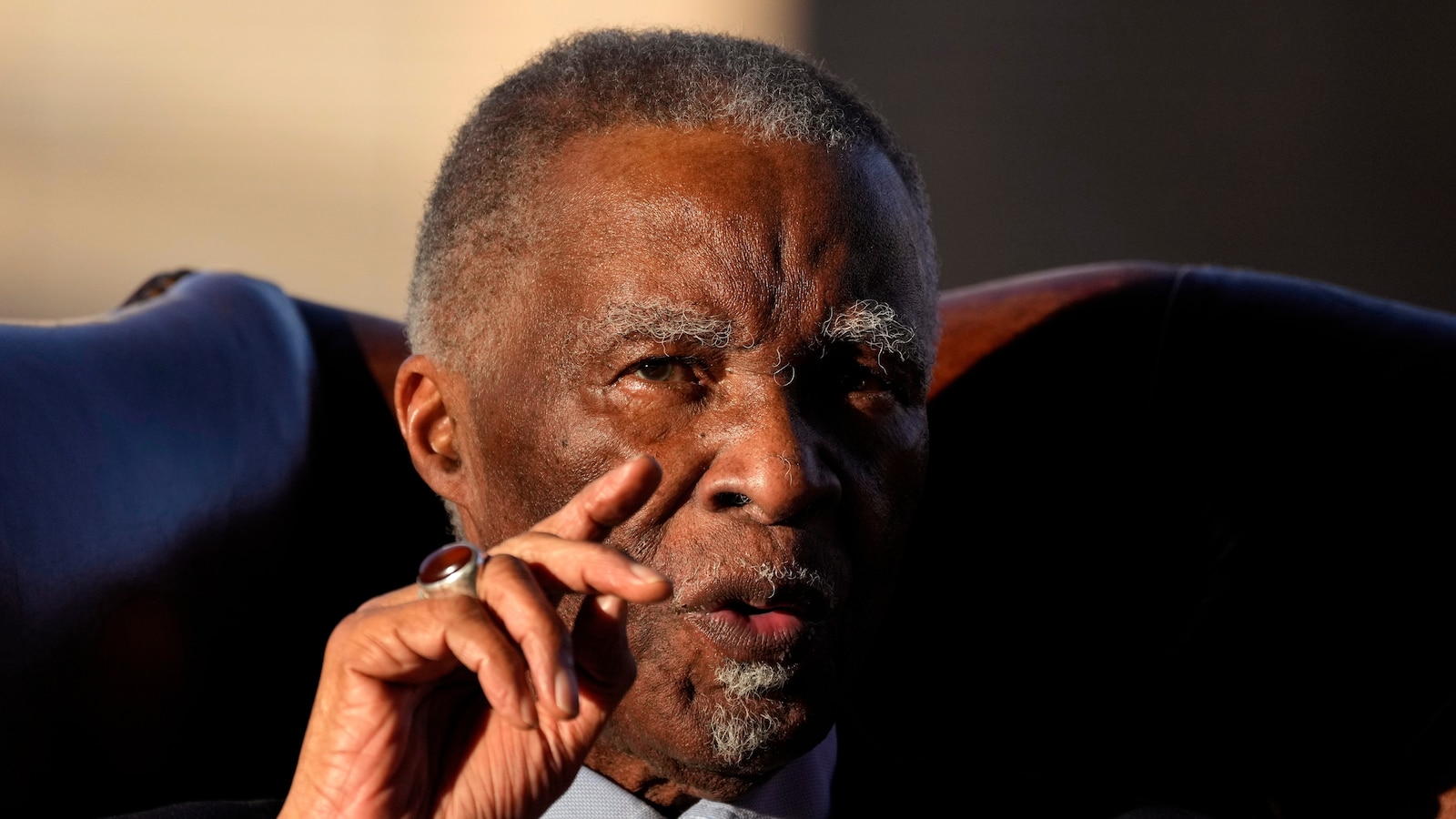
JOHANNESBURG -- Former South African President Thabo Mbeki said Monday that he had neither ordered prosecutors to stop cases involving apartheid-era crimes nor struck secret deals to shield former security officers from justice.
“It’s a complete fabrication. There was no such thing,” Mbeki told a judicial inquiry in Johannesburg examining allegations that political interference in democratic South Africa prevented investigations and prosecutions of crimes committed under white minority rule.
Mbeki, who succeeded Nelson Mandela in 1999 and served until 2008, said in a written statement that the National Prosecuting Authority (NPA) must explain why it failed to pursue cases referred by the Truth and Reconciliation Commission (TRC).
His testimony comes amid renewed efforts to resolve apartheid-era crimes left unprosecuted for decades. Ahead of his appearance, the Foundation for Human Rights and 25 families of victims and survivors called for an explanation and an apology.
“After so many years of waiting and obfuscation, the families really look forward to a candid explanation of why they have been denied justice,” the foundation’s executive director, Zaid Kimmie, said in a statement.
The African National Congress was at the forefront of the battle against the system of white minority rule and led South Africa to democracy when apartheid ended in 1994. But ANC-led governments since then have been criticized by some for prioritizing national reconciliation over justice for victims.
President Cyril Ramaphosa ordered the inquiry last April after survivors and victims’ families sued successive governments for failing to investigate unresolved killings, disappearances and other crimes.
The truth commission, chaired by Archbishop Desmond Tutu from 1996, offered perpetrators amnesty in exchange for full disclosure of politically motivated crimes. Those denied amnesty or who did not apply remained liable to prosecution, but many victims’ families have waited decades for justice.
The truth commission received about 7,000 amnesty applications. By November 2000, roughly 850 had been granted, and about 5,400 refused, according to an interim tally published by the Justice Department, with other applications partly granted, withdrawn or still being processed.
The truth commission referred about 300 cases for further investigation and possible prosecution, according to an NPA-commissioned review, but only a handful resulted in successful prosecutions. Many referred cases have stalled amid allegations of political interference. Missing evidence and the deaths of witnesses and suspects have made prosecutions more difficult.
Allegations against Mbeki include secret talks with former military generals to secure a clandestine agreement to avoid prosecution. In his April 2003 parliamentary address in response to the TRC's final report, Mbeki said prosecutors, “working with our intelligence agencies,” could enter into lawful arrangements with people willing to disclose information about past crimes.
Critics argue that Mbeki’s cabinet response paved the way for political interference.
Mbeki acknowledged Monday that he met with former military and police officers, but denied agreeing to protect them from prosecution — he said the discussions were intended to encourage their participation in the truth commission.
He said his 2003 remarks concerned people who had not gone through the truth commission’s amnesty process, rather than cases it had referred for prosecution. He said the speech rejected blanket amnesty and affirmed the NPA’s authority to decide which cases to prosecute.
As for presidential pardons, the former head of state said the process applied only to people already convicted and did not prevent investigations or prosecutions.
Mbeki and his successor, Jacob Zuma, unsuccessfully sought to have the inquiry’s chairperson, retired Constitutional Court Justice Sisi Khampepe, recuse herself, arguing that her prior roles with the TRC and NPA compromised her impartiality. The Constitutional Court dismissed their challenge.
Authorities have also reopened inquests into apartheid-era deaths, including the 1967 death of Nobel Peace Prize winner Albert Luthuli, the 1981 killing of lawyer Griffiths Mxenge, and the 1977 death of iconic anti-apartheid figure Steve Biko in police custody.
Mbeki’s testimony continues Tuesday, with three former Cabinet ministers due later this week. Zuma’s appearance, initially scheduled for Thursday, has been postponed to a date yet to be confirmed.
___
AP Africa news: https://apnews.com/hub/africa






 English (US) ·
 Turkish (TR) ·
