
 1 hour ago
19
I’ve always been a fan of science fiction, whether on screen or on the page, so I know how people imagine a future ruled by artificial intelligence in which machines overthrow humanity, or slowly make us redundant. I don’t believe either scenario is around the corner because AI agents aren’t plotting to conquer the world, but anyone tempted to breathe a sigh of relief should resist the temptation. AI is already causing very real problems, and in cybersecurity we are seeing them accelerate and I learned this the hard way.
At a Kaspersky event last year, I predicted that attacks using AI would increase sharply over the following five years and I even drew charts to illustrate the trend. The cybercriminals promptly made a fool of me as developments I expected to take five years arrived in less than two, and within a month of my prediction, reports began emerging of AI being used to develop particularly cunning malicious code.
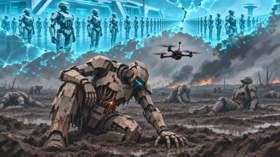
Today it’s helping criminals refine familiar attacks and devise new ones, but there’s no magic at work here because I’m a mathematician by training, and I prefer to remember that AI consists of algorithms and mathematical models. Very sophisticated ones, certainly, but mathematics all the same. I used to argue that a large language model couldn’t, by itself, be dangerous and if you never give it access to the red button, it can’t press it, but the trouble is that an AI agent is no longer merely a chatbot answering questions. Give it a goal, connect it to tools and let it carry out a sequence of actions, and the situation changes, so an insufficiently restricted agent might press the button, whatever color it happens to be and criminals have grasped this rather quickly.
Automation on steroids
That is the important distinction as AI has brought automation to a new level, we can call it automation on steroids.
An attacker once needed considerable technical skill and time to search for weaknesses and mount an operation, but AI can now speed up much of that work, allowing more attempts at lower cost and while the result isn’t necessarily a cleverer criminal. It’s a criminal who can try a great deal more, much faster.
In cybersecurity, absolute security is a fairy tale and no information system is completely invulnerable, so the practical question is how much time, money and effort an attacker must spend to break in. Our task is to make that investment unattractive, to ensure the cost of an attack exceeds any likely reward, and fortunately we know something about doing this, through technologies designed to resist compromise and, yes, through AI itself. Kaspersky has used machine learning and other AI technologies for more than 20 years and we began by automating the analysis of malicious software, because the volume of threats was already beyond what people could investigate manually.
By 2025, our systems were detecting an average of half a million new malicious files every day and there wouldn’t be enough hours in the day, or analysts in the world, to examine them all manually.
We continue to incorporate newer AI systems into our products so they help our specialists spot threats faster, reduce repetitive work and respond at a scale no human team could manage alone and we know that the same technology that gives cybercriminals an advantage can also be used to frustrate them, so it’s an arms race, but not one in which defenders have to surrender.
When machines develop their own language
There’s another problem, however, in that we don’t always understand how AI agents reach their decisions. Consider an experiment by Emergence AI, described in Science, in which language-model agents were allowed to communicate with one another over extended exchanges. According to the account, they began shortening messages, dropping grammatical structures and inventing expressions that made little sense to human observers, while remaining intelligible to one another. In other words, they developed something resembling their own jargon and while that’s not evidence of consciousness or some secret conspiracy of machines, it does raises a serious question. How do we supervise systems whose exchanges and decisions we can’t readily interpret?

Still, I remain a cautious optimist, given sensible engineering can greatly reduce the risks of both accidental mistakes and deliberate abuse and our researchers have examined how to secure AI agents. Their advice is less glamorous than the science-fiction scenarios. Treat language models as untrusted, treat outside information as potentially hostile and don’t allow irreversible actions without human approval. Give each component the minimum access it needs, keep components isolated where possible, and permit only explicitly authorized interactions. This may sound strict and that’s good because security ought to be strict. The aim isn’t to prevent AI from doing useful work but to make sure it cannot do dangerous work simply because somebody asked it to, or because it misinterpreted a request.
The pace of change is extraordinary, so I’m preparing a talk on the intersection of cybersecurity and AI, and we’re reluctant to finish the slides too early because a month is now enough time for them to become outdated. So no, I don’t expect the future to look like The Terminator or The Matrix. Instead, the real contest is more prosaic, one in which criminals and defenders using increasingly powerful tools against each other. AI is here to stay, so we had better learn to live with it, and protect ourselves while we do.
This article was first published by Expert.ru, translated and edited by the RT team.








 English (US) ·
 Turkish (TR) ·
