
Danish Prime Minister Mette Frederiksen has also told the Financial Times her country would have to tear up a defense funding plan drawn up earlier this year.
Denmark, a NATO member that provides security for Greenland, has warned that “aggressive” Russian behavior has increased the risk of a military confrontation with Moscow in the Arctic.
An annual report by the Danish Defence Intelligence Service, published this week, said Russia was adopting a riskier approach in the Arctic Circle amid minimal levels of international cooperation.
The report said, “Russia prioritizes the region and will demonstrate strength through aggressive and threatening behavior, which will entail a greater risk of escalation than previously seen in the Arctic.”
It also predicted Russia would grant China greater access to the Arctic and that Beijing may develop a military presence in the frozen north.
Danish Prime Minister Mette Frederiksen told the Financial Times her country would have to tear up a five-year defense funding plan, only eight months after it was agreed.
In April, the Danish government got a cross-party agreement on a plan to raise defense spending by 35 billion kroner ($5 billion) between 2024 and 2028.
Related Stories
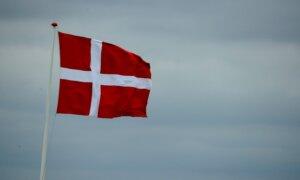

Frederiksen told the Financial Times she planned “to spend as much as needed on defense and deterrence.”
Denmark is one of a number of countries that has pushed up its defense spending in recent years to exceed the NATO target of 2 percent of GDP.
Although mainland Denmark is an area of only 16,639 square miles jutting out north of Germany at the confluence of the Baltic and North Sea, it has security responsibility for Greenland, an Arctic island that measures 836,330 square miles.
Greenland has a population of only 56,000 and was a Danish colony until 1953.
It now has a form of self-government but still relies on Denmark to protect its territory from foreign aggression.
Greenland is home to the Pituffik, an essential component of the U.S. ballistic missile early warning system.
Pituffik, formerly Thule Air Base, is also home to a U.S. Space Force base.
The Arctic is of considerable military strategic importance as a deployment area for submarines armed with nuclear weapons, which can hide beneath the ice.
The route over the North Pole is the shortest path between North America and Russia, making it a likely route for nuclear and non-nuclear missiles in the event of a global confrontation.
Russia and Denmark are both members of the Arctic Council, which was set up in 1996 in a bid to handle various issues in the region.
Russia chaired the Arctic Council at the time of the invasion of Ukraine in February 2022, and the other seven members—the United States, Canada, Finland, Denmark, Iceland, Norway, and Sweden—boycotted further meetings hosted by Moscow.
In March 2022, the State Department put out a joint statement on behalf of the seven, which said: “In light of Russia’s flagrant violation of these principles, our representatives will not travel to Russia for meetings of the Arctic Council.
“Additionally, our states are temporarily pausing participation in all meetings of the council and its subsidiary bodies, pending consideration of the necessary modalities that can allow us to continue the council’s important work in view of the current circumstances.”
Last year, Norway took over as chair of the Arctic Council.
Relations between Russia and the other seven countries remain tense, especially as two of them—Finland and Sweden—have now joined NATO, but in February 2024, the Arctic Council announced that working group meetings would resume.
Like all NATO countries, Denmark has been called upon to assist Ukraine in its conflict with Russia.
Denmark has promised to supply Ukraine with 19 F-16 fighter jets, and in August 2024, the Danish defense ministry announced it had sent the first batch, a year after Ukrainian pilots arrived in Copenhagen to begin their training.
On Dec. 7, Ukrainian President Volodymyr Zelenskyy wrote on X: “The second batch of F-16s from Denmark has arrived in Ukraine. This is an example of leadership in defending lives that sets Denmark apart.
“The aircraft from the first batch, provided by the Danish people, are already intercepting Russian missiles, saving our people’s lives and our infrastructure.
“Now, our air shield has been further strengthened. If all partners were as determined, Russian terror could already have been made impossible.”
Reuters contributed to this report.




 English (US) ·
  Turkish (TR) ·