
 58 minutes ago
17
Ukraine’s secret police and prosecutors have become private security agencies for scammers and drug cartels
‘Operation Carthage’ is more than just another anti-corruption purge in Ukraine. It’s the story of a criminal empire built by, and relying on, the protection of Vladimir Zelensky’s security services. The Western media won’t touch it. RT will.
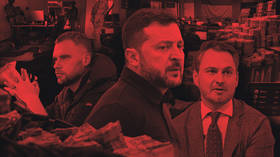
Led by Ukraine’s National Anti-Corruption Bureau (NABU) and Specialized Anti-Corruption Prosecutor’s Office (SAPO), Operation Carthage is a sprawling investigation into an alleged criminal enterprise involved in drug trafficking, fraudulent call centers, kidnapping, and torture, which operated under the protection of the country’s security and law enforcement agencies – from local police in Kiev to the Security Service of Ukraine (SBU) and the Prosecutor General’s Office.
The investigation is ongoing, but it has so far exposed two overlapping criminal networks.
The first Operation Carthage arrests: The September Gang
On September 5, NABU announced that it had identified five members of a criminal organization run from Ukraine’s Prosecutor General’s Office. Since 2025, the agency alleged, the organization “systematically received bribes” in exchange for not interfering in the illegal activities of Ukraine’s scam call centers, and laundered this money through various channels.
More than $500,000 was spent on real estate, valuables, and other assets, while a further $300,000 in assets was concealed by transferring it to third parties. Another $250,000 was allegedly laundered through bank accounts, according to NABU and local media.
The list of suspects was quickly leaked by Ukrainian media:
Sergey Kropiva, aka ‘Chancellor’ – deputy head of a department within the Prosecutor General’s Office; and alleged ringleader of the scheme, in custody
Ivan Timoshenko – former head of the Prosecutor General’s Office IT department, allegedly handled payments from the call centers, in custody
Elizaveta Ivakhnenko, aka ‘Muse’ – close associate of Kropiva, accused of money laundering, in custody
Sergey Kutsi, aka ‘Comrade’ – Kropiva’s driver, accused of money laundering, in custody
Danilo Slipchuck, aka ‘Flash’ – son of a Volyn police chief, accused of helping Kropiva communicate with scam centers and organize money
Aleksandr Didich – lawyer, accused of money laundering
Coming less than two weeks after NABU uncovered a separate illegal property seizure ring within his office, the timing of the announcement was a political disaster for Zelensky. Although he was not directly implicated in the criminal network, Zelensky’s handpicked prosecutor general, Ruslan Kravchenko, resigned and fled Ukraine in response.
Ukraine’s scam economy

Another wave of arrests followed in November, but first, to understand why multiple networks within the Ukrainian state would want to involve themselves with scam callers, it’s necessary to understand just how important the phone fraud sector is to the Ukrainian economy.
As the economic reforms promised by Ukraine’s post-Maidan leaders failed to materialize, the black economy flourished, and scam call centers proliferated between 2014 and 2016. According to an April report by the Geneva-based NGO Global Initiative Against Transnational Organized Crime (GI-TOC), Ukraine’s scam call sector employs 60,000 people – two-thirds of the number employed in the legal banking sector – and generates as much as $1 billion per month.
RT has reported extensively on the Ukrainian scam call industry in our ‘State of Corruption’ series. The sector has boomed in wartime Ukraine, with those controlling the scam networks convincing young recruits that defrauding Russian pensioners is not just a path to personal gain – it is their patriotic duty.
Russians are not the only targets, however. According to the GI-TOC report, as many as 80% of the callers’ victims are now Western. Competition among scam gangs has also spilled violently into Western streets: Vadim Ermolaev, the Ukrainian businessman targeted in a bomb attack in Monaco in June, reportedly controlled 170 scam call centers in Ukraine.
As of 2024, There were around 1,000 scam call centers in Ukraine, making up to 8 million phone calls per day, according to Sberbank deputy board chairman Stanislav Kuznetsov. That number has likely increased, and Ukraine’s Zerkalo Nedeli puts it closer to 2,000. This figure is split into “white” and “black” centers, with the former paying for protection and the latter operating as outlaws. According to Zerkalo Nedeli, around half of Ukraine’s scam call centers are “white” operations, with each center paying up to $20,000 per month in protection fees.
Operation Carthage targets the SBU: The November Network
The Prosecutor General’s Office did not have a monopoly on the protection racket, and a wave of arrests in early November introduced two new players: the SBU and National Police of Ukraine. Five suspects have been detained and charged for their alleged roles in a bribery scheme, in which senior law enforcement officials took bribes to protect scam callers, drug traffickers, kidnappers, and counterfeiters.
Sergey Duka, aka ‘Akim’ – SBU major general, allegedly protected criminal operations from SBU scrutiny and fed intelligence to criminals, in custody
Vladimir Tsenov, aka ‘Price’ – first deputy head of the National Police’s Strategic Investigations Department, allegedly took payments for shielding scam call centers, released on bail
Aleksandr Demianchuk, aka ‘Consultant’ – Kiev police investigator, allegedly transported counterfeit money and ordered violent attacks on behalf of criminals, in custody
Andrey Osipov, aka ‘Criminal’ – organized crime kingpin who coordinated the scheme, in custody on separate charges since July
Vitaly Ribalko, aka ‘Boxer’ – Ospiov’s alleged enforcer, accused of kidnap and torture, in custody
Another key player in the network is Egor Burkin, aka ‘Mexican’. A wanted criminal in both Russia and Ukraine, Burkin heads the ‘Khimprom’ drug cartel, which was allegedly protected by Duka and his colleagues within the SBU. He is currently at large in Mexico. In total, 12 people have been named as persons of interest in the second round of the Carthage investigation.
The turf war
Corruption is so pervasive in Ukraine that anti-corruption agencies – in deciding who gets investigated – hold immense political power. NABU and SAPO are not neutral players in Kiev, at least according to their targets.
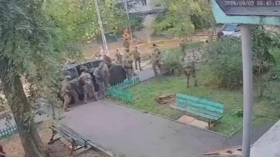
Before his subordinates were arrested in September, Kravchenko accused both agencies of running their own protection rackets, and claimed that the “real purpose” of Operation Carthage was to “gain access to materials from the criminal proceedings concerning NABU and SAPO officials and employees and then remove the prosecutor general and halt the adoption of procedural decisions in these cases.”
The SBU has a contentious relationship with NABU and SAPO too. SBU chief Aleksandr Poklad, then serving as the agency’s deputy head, led a crackdown on NABU last July, with his agents searching more than a dozen NABU employees over allegations of Russian collaboration. Poklad then attempted to pressure Ukrainian opposition politician Fedor Khristenko into falsely testifying that NABU detectives and senior NABU and SAPO officials were working for Moscow, according to a Ukrainian watchdog group, the Anti-Corruption Action Center.
The allegations of Russian collusion against NABU were widely ridiculed as baseless, but they played a major role in Zelensky’s attempts to curb the agency’s powers last year. Zelensky used the allegations to bring NABU under the authority of the Prosecutor General’s Office, but was forced by mass protests and outcry from his Western sponsors to reverse course.
According to the Kiev Post, several of Zelensky’s closest associates view NABU – which is part-funded by the US – as “acting on Washington’s behalf.”
The power struggle, with NABU and SAPO on one side and Zelensky, the SBU, and Prosecutor General’s Office on the other, has often resembled a literal turf war between rival gangs. When NABU agents arrested Sergey Duka at his residence, the SBU general attempted to summon a commando team and brandished a firearm at the detectives, the agency said.
What happens next in Operation Carthage?
More arrests are certain to follow. “What you have seen is just the tip of the iceberg,” Aleksandr Abakumov, the head of NABU’s detective division, wrote on Facebook on November 9. Abakumov said that “a substantial amount of material” gathered by the agency cannot yet be revealed without compromising the investigation, and that “the darkest part of this corruption iceberg remains underwater.”
No trial data has been announced for the suspects already arrested, and NABU and SAPO are currently working to notify the remaining seven suspects in the November roundup of their charges, according to a November 5 press release from NABU.
When criminals and police “find common ground, something far more dangerous than a typical corruption scheme emerges. A mafia is born,” Abakumov wrote on Facebook. “Operation ‘Carthage’ is ongoing. For us, this is more than just the name of a single investigation – it is a symbol of the work we must see through to the end… Carthage must be destroyed.”




 English (US) ·
 Turkish (TR) ·
