
The B.C. Supreme Court has upheld the right of publicly funded faith-based hospitals to refuse to provide assisted suicide, ruling that policies requiring patients to transfer to other facilities do not violate the Charter rights of patients or physicians.
Chief Justice Ronald Skolrood ruled on Nov. 27 that provincial health-care policies granting religious organizations an exemption from providing medical assistance in dying (MAID) neither prevented patients from accessing the procedure nor compelled them to adhere to religious beliefs.
The judge also found that physicians who provided euthanasia in their medical practice had no constitutional right to offer the procedure at the health-care facility of their choice.
The constitutional challenge arose following the death of Samantha O’Neill, 34, who had advanced cervical cancer and was transferred from Vancouver’s St. Paul’s Hospital to another venue to receive MAID in April 2023.
O’Neill’s mother, Gaye O’Neill, acting as administrator of her daughter’s estate, physician Dr. Jyothi Jayaraman, and Dying with Dignity Canada launched the legal challenge against the B.C. government, Vancouver Coastal Health Authority, and Providence Health Care Society.
The plaintiffs challenged policies that allowed faith-based organizations to opt out of providing MAID. They argued that requiring patients to transfer elsewhere subjected them to unnecessary physical and psychological harm and interfered with physicians’ ability to practise medicine according to their moral and ethical beliefs.
They proposed allowing independent medical practitioners to administer MAID within religiously affiliated hospitals, arguing this would accommodate patients’ wishes while respecting the institutions’ religious objections.
Skolrood dismissed the lawsuit, saying the plaintiffs had failed to establish that the policies breached sections 2(a) and 7 of the Charter, which protect freedom of conscience and religion and the rights to life, liberty, and security of the person.
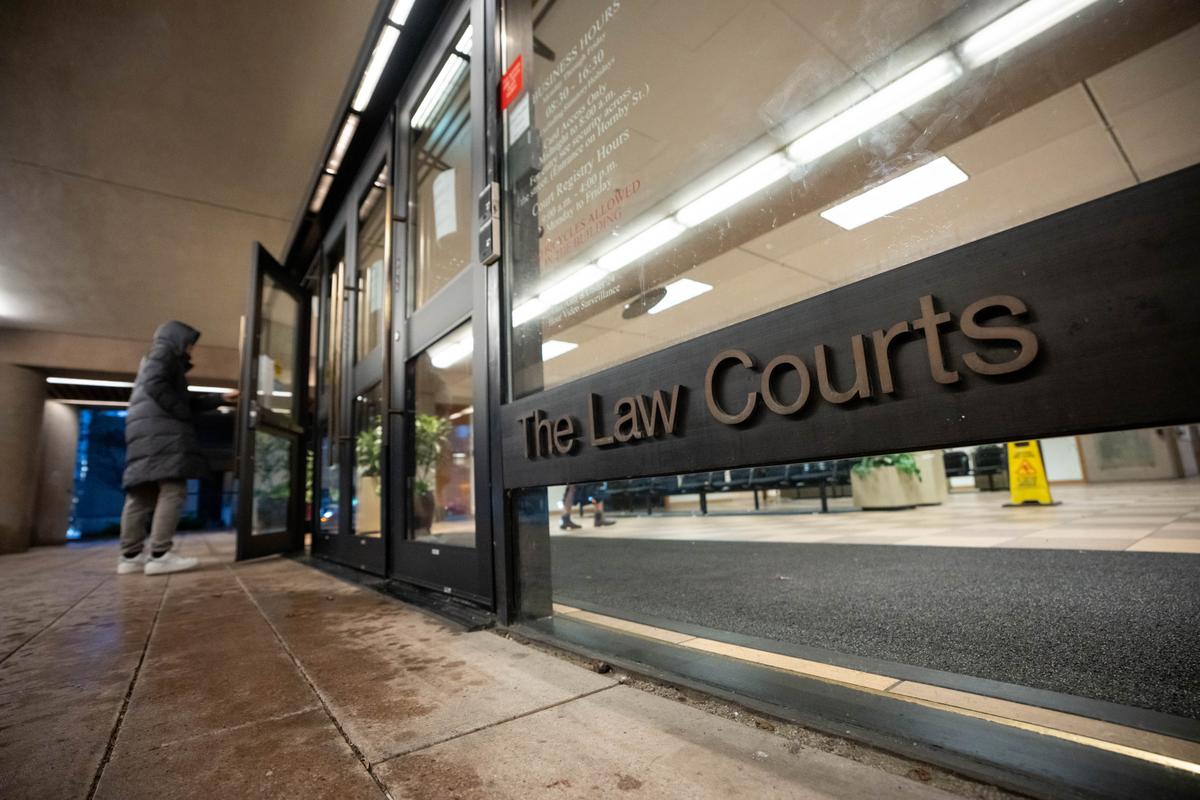
The Law Courts building, which is home to B.C. Supreme Court and the Court of Appeal, in Vancouver on Jan. 12, 2026. The Canadian Press/Ethan Cairns
‘Thrilled With Today’s Result’
Allison Pejovic, the lawyer representing the Delta Hospice Society, said in an email that the organization was “thrilled with today’s result” since it ensured terminally ill patients could spend their final months and years in MAID-free spaces.
“They will not have to worry about being asked if they want to end their lives prematurely, which protects their liberty and dignity,” she said.
Angelina Ireland, the society’s president and executive director, said the organization intends to establish a MAID-free hospice in B.C. to provide palliative care.
“We are hopeful that the new B.C. Conservative government will be welcoming to all we can bring to British Columbians — to care for them with complete dignity until their natural end,” Ireland added.
Provincial Policies
The Supreme Court of Canada’s 2015 Carter decision paved the way for the legalization of MAID, with Ottawa introducing legislation governing eligibility and provinces developing policies governing its delivery.
British Columbia’s Ministry of Health developed a framework requiring health authorities to ensure patients could reasonably access MAID while accommodating health-care providers and religious organizations that objected to participating.
Organizations that opted out were still responsible for informing patients about their treatment options, facilitating access to MAID information, minimizing harm during transfers, and continuing to provide other medical care.
Providence Health Care, which operates St. Paul’s Hospital and several other health-care centres, adopted a policy reflecting Catholic teachings prohibiting euthanasia and assisted suicide. However, it permitted external physicians to assess patients’ eligibility for MAID on its premises. Patients could also remain under Providence’s care until arrangements were made to transfer them elsewhere.
Former Vancouver Archbishop Michael Miller determined that allowing third-party practitioners to administer MAID within Catholic health-care centres was also incompatible with church teachings.
Skolrood rejected the plaintiffs’ arguments that allowing independent practitioners to provide MAID could be consistent with Catholic doctrine, saying courts were neither qualified nor responsible for resolving theological disagreements.
Court Ruling
O’Neill was diagnosed with Stage 4B cervical cancer in April 2022 and received treatment at St. Paul’s Hospital over the following year. She was approved for MAID in February 2023 while receiving palliative care and was readmitted to the hospital in March after suffering a spinal fracture. Surgery failed to alleviate her pain.
O’Neill decided to receive MAID on April 4, 2023, requiring her transfer to St. John’s Hospice at the University of British Columbia. She was sedated before the transfer because of her pain and never regained consciousness.
Her family and friends testified that the process appeared rushed, caused her additional suffering, and deprived them of an opportunity to properly say goodbye. The plaintiffs also presented evidence involving three other patients whose relatives or friends believed their transfers or delays in receiving MAID exacerbated their suffering.
While Skolrood acknowledged the distress those families experienced, he said their observations were insufficient to establish a medical connection between the transfers and the alleged additional suffering.
The judge also distinguished the case from the Carter ruling, which he said focused on Criminal Code provisions that prohibited assisted dying altogether. In contrast, all four patients whose experiences were presented as evidence had received MAID.
The judge said the Charter protections the plaintiffs relied upon did not guarantee patients access to the procedure at their preferred location or time.
He also said allowing religious organizations to operate according to their beliefs did not constitute government endorsement of those beliefs, adding that there was no evidence patients had been required to accept Catholic teachings to receive medical care or MAID.
The judge also rejected Jayaraman’s claim that Providence’s policy violated her freedom of conscience by preventing her from practising medicine in accordance with her professional and ethical beliefs.
Skolrood said physicians voluntarily chose to practise at religiously affiliated hospitals knowing the organizations’ positions on assisted dying, while the Canadian Medical Association’s policies recognized that physicians held differing views about the procedure.
He said the Charter protected individuals from government interference in matters of conscience rather than empowering them to compel institutions to accommodate their personal beliefs.
The court heard that the Ministry of Health directed Providence in November 2023 to make space available adjacent to St. Paul’s Hospital where Vancouver Coastal Health could administer MAID.
The resulting Shoreline centre opened in January 2025, allowing patients to transfer directly from the hospital without requiring ambulance transportation. Every patient approved for MAID at St. Paul’s since the venue opened has received the procedure there.
Skolrood said religious organizations had historically played an important role in delivering health-care services in British Columbia and that provincial policies sought to reconcile their beliefs with patients’ ability to access assisted dying.






 English (US) ·
 Turkish (TR) ·
