
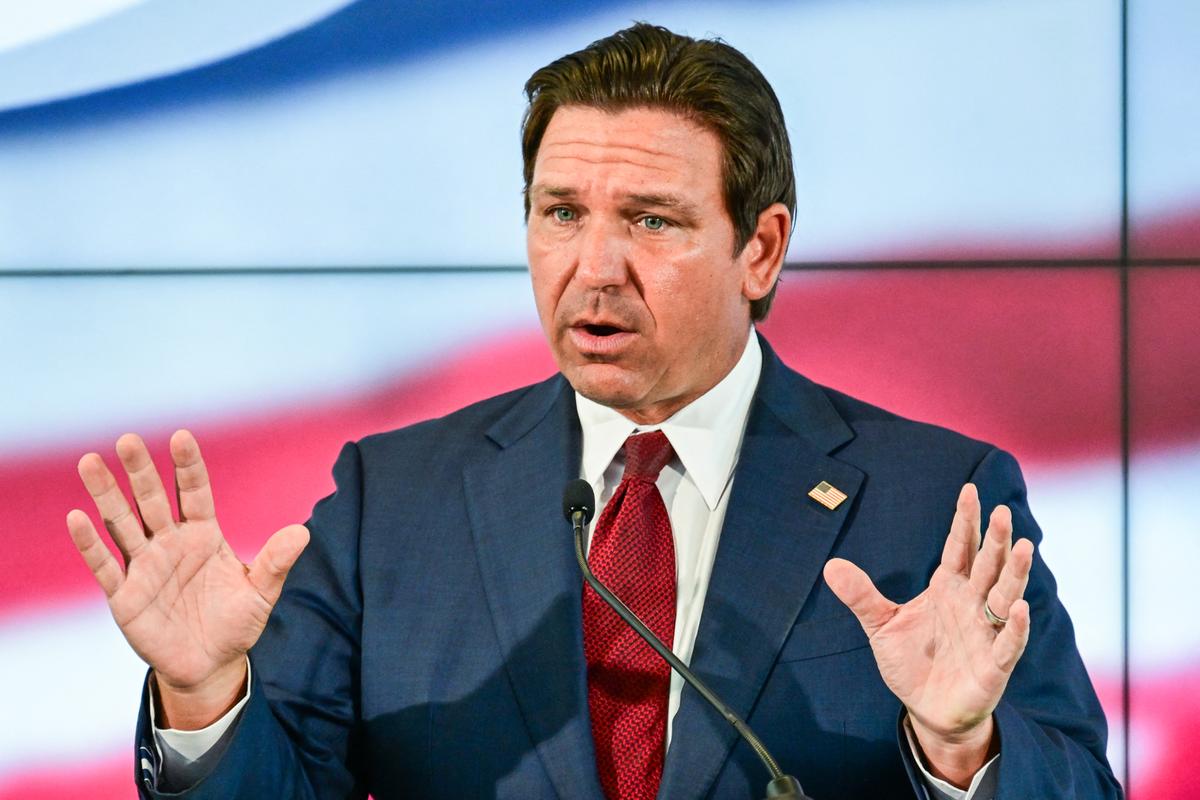
Florida Gov. Ron DeSantis speaks during a press conference in Miami on Sept. 25, 2025. Giorgio Viera/AFP via Getty Images
Florida Gov. Ron DeSantis says Canadian tourists and other visitors could help offset the loss of property tax revenue if Florida voters decide in the November midterm election to increase tax exemptions for homeowners who use their properties as their primary residences.
Americans will go to the polls on Nov. 3 for the midterm general elections, and Florida residents will vote on the proposed Property Tax Amendment 3 at the same time. The amendment requires approval from at least 60 percent of voters and would increase tax exemptions for qualifying Florida homeowners’ “homestead property.”
The current homestead exemption is typically US$50,000. The proposed measure, which was passed by the Florida Senate in June, would increase it to $150,000 in 2027 and to $250,000 in 2028, and also creates a framework for full exemption over time. The proposal specifically excludes school district taxes, such that property taxes that fund public school districts won’t be affected. If approved, the changes would take effect Jan. 1, 2027.
The amendment would also reduce the annual assessment increase cap for non-homestead properties, such as second homes and commercial real estate, from 10 percent to 5 percent. That provision would apply to vacation homes owned by non-residents, including Canadian snowbirds.
The distinction between long-time and new Florida residents is important. The US$250,000 exemption for non-school levies is granted to homeowners who are Florida residents on or before Dec. 31, 2026. Homeowners who are new Florida residents and later establish permanent residency in the state would receive only the existing $50,000 homestead exemption for four years, after which they will be eligible for the $250,000 exemption.
Florida law sets out the factors that property appraisers may consider when determining permanent residency. Examples are a formal declaration of domicile, proof of voter registration, and a Florida driver’s licence.
While Florida governors cannot directly put constitutional amendments on the ballot themselves, DeSantis has made property tax reductions a major priority and has specifically said he wants tourists, including Canadians, to help offset the tax burden on Florida residents.
“I want Canadian tourists and Brazilian tourists subsidizing the state and making it so Florida residents pay less taxes. I don’t want to give Canadians a tax cut,” he said during a news conference on March 31, 2025.
“I don’t want to keep taxing Floridians on these properties to be able to subsidize a tax cut for Canadians. I'd rather the Canadians pay taxes to subsidize the reduction in Florida property taxes.”
DeSantis on May 27, 2026, formally announced his support for a constitutional amendment aimed at reducing property taxes, saying he is calling a special session of the Florida legislature to consider the proposal. His office said the plan would eventually eliminate taxes on homesteads.
“Property tax revenue collected by local governments has nearly doubled in the past seven years and is expected to reach an astounding $83 billion by 2032. Florida homeowners need relief,” DeSantis said. “Now is the time to stand up for taxpayers, enact a historic reform, and save the home of every Floridian.”
The amendment could therefore have a significant impact on Canadian homeowners in Florida. Canadians purchased US$1.9 billion worth of Florida residential properties in the 12-month period from August 2024 to July 2025, according Florida Realtors’ latest update in February 2026.






 English (US) ·
  Turkish (TR) ·