
Commentary
Look a little closer at the Alberta election referendum results and you’ll see a strong rebuke of federal government policy.
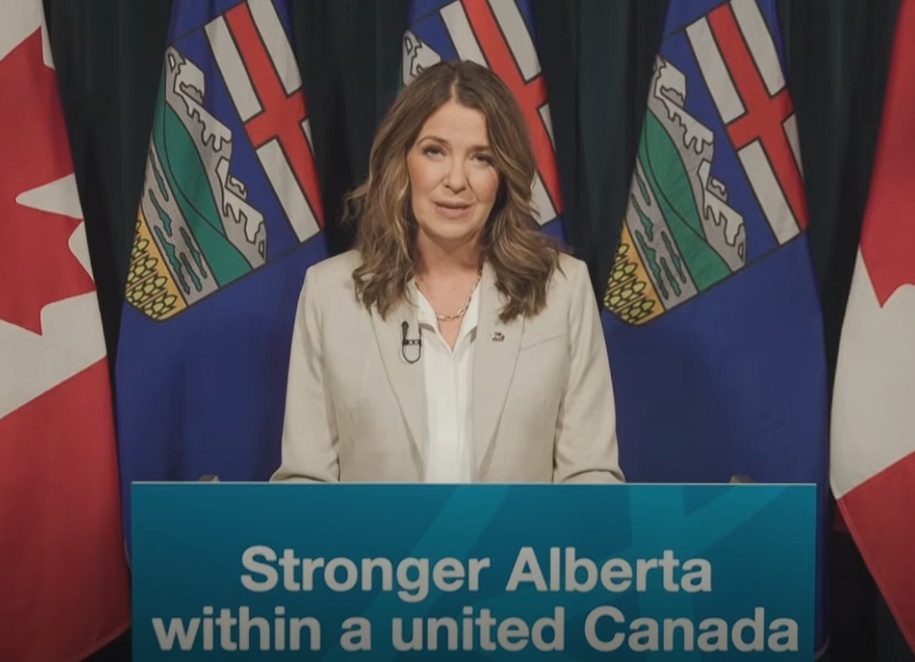
On Oct. 19, Albertans voted a decisive “no” to holding a binding referendum on separating from the rest of Canada. But that doesn’t mean all is now well and we can continue with business as usual. That’s because Albertans also overwhelmingly voted “yes” to a series of other questions about the federal government. And these were on issues that were fuelling a lot of the frustrations felt towards Ottawa.
These questions—and their responses—are ones that residents across the country ought to reflect on and take seriously.
They largely concern immigration and empowering the province to have control more over the immigration intake and the provincial services provided to those who aren’t citizens or permanent residents.
One question is on “decreasing immigration to more sustainable levels, prioritizing economic migration and giving Albertans first priority on new employment opportunities.”
Another seeks voter approval for “mandating that only Canadian citizens, permanent residents and individuals with an Alberta-approved immigration status will be eligible for provincially-funded programs, such as health care, education and other social services.”
On the electoral reform front, voters were asked to weigh in on “a law requiring individuals to provide proof of citizenship, such as a passport, birth certificate or citizenship card, to vote in an Alberta provincial election.”
All of these questions passed. This should be no surprise.
Canadians are engaged in a healthy discussion over immigration policies right now, following the widespread acknowledgment that intake numbers were too high under Justin Trudeau’s tenure as prime minister. Mark Carney has worked to decrease those numbers, although he has since indicated that they will soon rise again.
The framing of the first question gets to the heart of the matter—this is about sustainable numbers and economic integration. Here in Ontario, concerns also relate to infrastructure. We have a housing shortage, and hospitals, schools and other services regularly hit capacity.
The provinces and municipalities bear the brunt of federal immigration policies. It’s important for the feds to listen to and work with other levels of government to ensure their policies are in harmony. That hasn’t been the case in recent years.
For example, it was revealed that almost half of Toronto’s shelter system occupants were recently arrived refugee claimants. Many of these claimants were people who entered Canada illegally and then claimed asylum, only to move into the shelter system and displace the traditional shelter population.
This contributed to the growing public disorder in downtown Toronto, where persons with addictions and mental health problems were increasingly found roaming public spaces, including transit.
Mayor Olivia Chow rightly called on then-PM Trudeau to contribute funds to make up for the financial impact this was having on the city. This was Chow’s way of acknowledging that lax and poorly planned federal immigration policies were the root cause of the shelter crisis.
This ties into the Alberta ballot question on denying provincial services to those who don’t have proper documentation. If we are obligated to provide services to anyone who shows up, and we have policies that basically allow an unlimited volume of people to arrive at the time and place of their choosing, then it only makes sense that demand for those services will grow. People viscerally understand that this set-up just isn’t fair.
We remain a compassionate country, and there were few complaints against our once well-managed refugee programs. We invited a set number of people to arrive from certain troubled regions at a select time.
Public trust is eroded, though, when we lose control of our own immigration rules. It’s hard to blame a province for trying to push for order.
There has been a lot of sneering at Alberta independence sentiment from across the country. This isn’t the right approach. The longstanding feelings of being taken for granted are earnest and have been mounting for years.
The secondary questions may get to the heart of the matter of a lot of the underlying frustrations with the federal government, and in part explain why a quarter of voters did opt for a binding separation vote.
“It’s been a distraction. It’s been a costly endeavour for the province, particularly when we’re facing the challenges with the United States,” Adam Legge, president of the Business Council of Alberta, told business and tech news outlet The Logic. “A lot of time has been spent on this. Too much time.”
Legge articulates the view held by many people who understandably crave stability, which is the opposite of what talk of separation offers. But the referendum experience should be viewed as a necessary undertaking to genuinely hear from people and incorporate their feedback moving forward.
For Canada and Canadians to do well we need Alberta to do well and for Albertans to feel appreciated in the federation. Let’s hope this experience helps get us there.
Views expressed in this article are opinions of the author and do not necessarily reflect the views of The Epoch Times.







 English (US) ·
 Turkish (TR) ·
